Read First
HBOT for Chronic Fatigue Syndrome (ME/CFS) — What It Involves
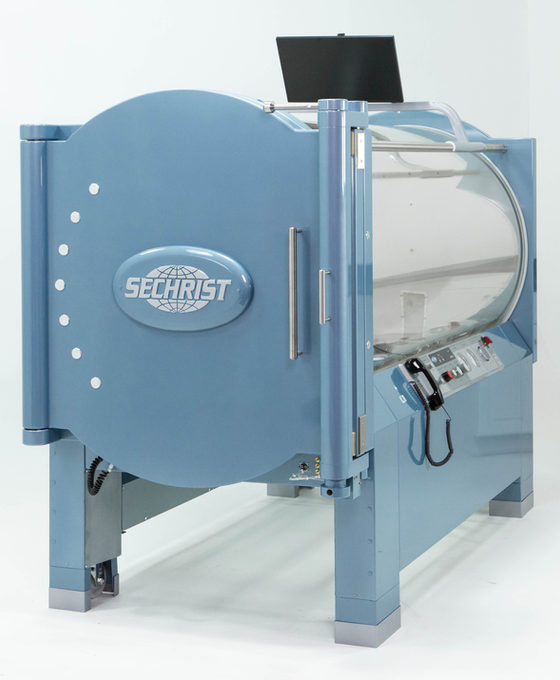
Quick answer: Published hyperbaric studies exploring chronic fatigue syndrome (ME/CFS) typically describe pressures around 1.5–2.0 ATA across a series of supervised sessions; the evidence base is small and developing, so an honest reading is cautious. This is educational information, not medical advice — consult a qualified doctor. If HBOT is pursued, the equipment involved is a hard (clinical) hyperbaric chamber, which TheHBOT supplies from ₹15 lakh.
Important — educational information only. This page summarises what published hyperbaric oxygen therapy (HBOT) research and clinician protocols discuss. It is not medical advice, a diagnosis, or a treatment plan, and makes no claim to treat, cure or prevent any condition. If you are considering HBOT, consult a qualified doctor. TheHBOT supplies hyperbaric chambers (equipment) — we do not provide therapy or run sessions.
Chronic fatigue syndrome — also known as myalgic encephalomyelitis, or ME/CFS — is a complex, often disabling condition characterised by profound fatigue, post-exertional malaise, unrefreshing sleep and cognitive difficulties. It appears in published hyperbaric oxygen literature, but as with several conditions on this site, the evidence base is small and developing rather than settled. Some studies have explored hyperbaric oxygen for fatigue-related outcomes; reviewers generally note the need for larger, better-controlled trials. We state this candidly because responsible information means being clear about what is and is not established.
Our role on this page is equipment, not treatment. We explain, for general education, what the published discussions involve, then help with the hyperbaric chamber a clinical protocol would use — if a doctor guides you toward one. We are a multi-brand aggregator and on-demand manufacturer, not a clinic. We do not diagnose ME/CFS, we do not treat it, we do not run sessions, and we make no claim that a chamber will improve fatigue, cognition or any symptom. Those are medical matters for a qualified clinician who knows your case.
ME/CFS also deserves particular care because sufferers are, understandably, often seeking options after long and frustrating journeys through the medical system — which makes them a group that over-optimistic marketing can exploit. We will not do that. If you are a patient, a doctor familiar with ME/CFS should lead. If you are a clinic considering hyperbaric equipment, we help with the sound, unglamorous part: choosing, importing, installing and servicing the right chamber, with honest framing about what the evidence does and does not support.
If you are a patient, the right first step is always a qualified doctor, who can advise whether HBOT is appropriate for your situation. If you are a clinic, recovery centre or hospital evaluating HBOT as a service, the equipment decision is where we help — comparing chambers across five brands, arranging documentation, and delivering and supporting the unit across India. The rest of this page covers what published protocols typically describe and which chamber matches, with a source to read further.
Summarises published protocols — not a diagnosis or treatment plan.
Whether HBOT suits you is a medical decision for a qualified doctor.
We source, deliver and install the chamber a protocol would use.
Clinics and hospitals: we compare, document and install the chamber.
India Pricing
The Chamber Chronic Fatigue Syndrome (ME/CFS) Protocols Would Use
Published chronic fatigue syndrome (me/cfs) discussions describe clinical pressures, which points to a hard (clinical) chamber. Indicative India price bands:
| Chamber Type | Pressure | Primary Buyer | Indicative India Price | Get Price |
|---|---|---|---|---|
| Soft / Portable | 1.3 – 1.5 ATA | Home, wellness, athletes | ₹3.5 – 12 lakh | Enquire → |
| Hard Monoplace | 1.5 – 3.0 ATA | Clinics, hospitals | ₹15 – 40 lakh | Enquire → |
| Hospital Multiplace | 2.0 – 3.0 ATA | Hospitals, wound-care | ₹40 lakh – 1.5 crore+ | Enquire → |
For the equipment detail see the hard chamber page. Read more on HBOT generally at Hyperbaric medicine.
Product Range
Which Chamber Type Matches Published Protocols
Here is how the chamber types compare, so you can see why chronic fatigue syndrome (me/cfs) discussions point to a hard chamber.
Inflatable fabric-shell units from OxyHealth and Summit to Sea. Compact, self-install.
Rigid-shell monoplace units from Sechrist for hospitals and specialist clinics.
Carry-case designs from Summit to Sea. Travel-ready for athletes and mobile practitioners.
Multiplace systems from Perry Baromedical and Fink. 2–18 patient capacity, AERB docs.
The Detail
What Published Protocols Describe — and the Equipment
What HBOT for ME/CFS involves (educational)
In the terms used in published hyperbaric literature, hyperbaric oxygen therapy involves sitting or lying inside a sealed chamber at raised pressure so that more oxygen is absorbed than at normal atmospheric pressure. Studies exploring ME/CFS have generally described mild-to-moderate pressures, commonly in the region of 1.5–2.0 ATA, across a course of sessions. The mechanisms proposed in the literature relate to oxygen delivery, mitochondrial function and inflammation, all of which are areas of active research in ME/CFS. We present this only to inform your reading and your conversation with a doctor; it is not a protocol for you to follow, nor a claim that HBOT resolves fatigue. Whether any such approach is appropriate for you is a medical judgement.
The evidence base — small and developing
Honesty about evidence status matters especially here. The published studies on hyperbaric oxygen and ME/CFS are limited in number and size, and systematic reviewers typically describe the evidence as preliminary, calling for higher-quality trials before conclusions are drawn. This does not mean the question is settled either way; it means a cautious reading is appropriate, and it means no one should purchase equipment on the assumption of a proven ME/CFS benefit. A clinician familiar with the condition is the right person to interpret this evidence in the context of your individual situation and the many other management approaches that exist.
Post-exertional malaise and the access question
ME/CFS has a feature that shapes the practical side of any protocol: post-exertional malaise, where exertion — including travel and activity — can trigger a worsening of symptoms. This is why the logistics of accessing sessions are not a trivial detail for this condition. A protocol requiring frequent clinic visits places a real physical burden on someone with exertion intolerance, which is part of why home-based mild approaches are sometimes discussed. These are genuine trade-offs to weigh with your doctor. On the equipment side, we simply note that access and consistency are worth planning realistically before any chamber is bought.
What pressure implies for the chamber type
The equipment consequence follows the pressure a protocol describes. Where mild pressures around 1.3–1.5 ATA are involved, a soft chamber — which is home-capable and self-installing — may be the relevant category, subject entirely to medical guidance. Where a protocol specifies pressures approaching 2.0 ATA, that exceeds a soft chamber’s range and points to a rigid hard chamber operated in a supervised setting. The distinction is not cosmetic: it determines whether the equipment is a self-install home unit from around ₹3.5 lakh or a clinical chamber from around ₹15 lakh, and whether supervision is implied.
Home mild chamber versus clinical setting
For ME/CFS more than most topics, the home-versus-clinic question is genuinely open and depends on the pressures a doctor specifies and the practicalities of the individual. A mild soft chamber lets a person hit a daily-consistency target at home without the exertion of travel, which some find appealing; a clinical protocol at higher pressure requires a supervised setting and its associated travel. We do not decide which is right — that is a clinical and personal judgement — but we can supply either honestly, and we will not push a clinical chamber on a home user, or a home unit where a clinical pressure is specified.
Equipment, import and installation in India
Whichever category applies, the Indian equipment picture involves genuine sourcing and, for imported units, a landed cost covering freight, customs, GST, delivery and — for hard chambers — installation and commissioning. Soft chambers arrive ready to self-install with an oxygen concentrator; hard chambers are commissioned on site with attention to electrical supply, oxygen handling and fire safety. We act as importer of record, quote an all-in ₹ figure, and remain the India service contact for spares and AMC. Buying genuine matters: documented units with warranty and authentic spares are safer and last longer than grey-market copies, which we never supply.
Our commitment on a sensitive condition
ME/CFS sufferers deserve straight dealing, not hype. So to be completely clear: we are an equipment company. We do not claim hyperbaric oxygen treats or cures ME/CFS, we do not offer medical advice, and we do not run sessions. If a doctor who understands the condition guides you toward a hyperbaric protocol, tell us the pressures involved, whether it is a home or clinical setting, and your city, and we will recommend the right chamber and quote a delivered India price. If your situation calls for something other than a chamber, we would rather tell you that than make a sale. Read more on the field generally via the source linked below, and let a qualified clinician lead your decisions.
Questions worth taking to a doctor who knows ME/CFS
ME/CFS is under-served and often poorly understood, so it helps to arrive at a consultation with focused questions before any equipment is contemplated. Ask: given my specific presentation, is there any role you would consider for hyperbaric oxygen, and how do you weigh the limited evidence? If so, what pressure and frequency, and crucially, how would we manage the exertion of getting to sessions given post-exertional malaise? Would a mild home-based approach reduce that burden, and is that something you would supervise? What outcomes should I realistically expect, over what timeframe, and how would we decide it is not helping and stop? Where does this sit against the pacing, symptom-management and other approaches you would prioritise first? These questions keep the decision medical and individual, which is where it belongs. They also clarify whether any chamber is appropriate and, if so, which category — the only point at which an equipment conversation with us becomes useful.
Staying open without falling for false hope
People with ME/CFS are often navigating years of dismissal and are, understandably, willing to try promising-sounding options — which makes them a target for overstated claims. We think the honest position holds two things at once: the evidence for hyperbaric oxygen in ME/CFS is genuinely preliminary and should not be oversold, and that does not mean a doctor cannot reasonably consider it as part of a broader, carefully monitored plan. What should raise concern is any seller who promises energy or recovery, who frames a chamber as a cure, or who encourages an aggressive self-directed protocol in a condition where over-exertion can cause harm. We will not do any of those things. Our contribution is narrow and honest: if a knowledgeable doctor guides you toward a hyperbaric approach, we supply the right, genuine chamber and install it; if the evidence or your situation does not warrant one, we say so plainly and lose the sale without complaint.
Cost, effort and setting realistic expectations
For ME/CFS especially, it is worth being frank about the practical cost — in money, energy and expectation — of pursuing any hyperbaric approach, because those costs fall on a person already dealing with limited reserves. On money: a mild soft chamber for home use starts around ₹3.5 lakh, while a clinical hard chamber and supervised sessions represent a much larger commitment; these are real sums that should be weighed against other management approaches and their evidence. On energy: any protocol involving travel and repeated sessions has to be reconciled with post-exertional malaise, which is why the home-versus-clinic question is not merely logistical but central to whether a plan is even feasible for a given person. On expectation: because the evidence is preliminary, the honest stance is to try any considered approach as an experiment with a clear way to judge whether it is helping and to stop if it is not, rather than as a hoped-for cure. None of these judgements are ours to make — they belong to you and a doctor who understands the condition. Our part is only to make the equipment side clean and honest if a chamber is genuinely chosen: the right unit, a transparent delivered price, and no inflated promises about what it will do. We would far rather a buyer with ME/CFS approach this clear-eyed than spend scarce money and energy on the strength of marketing we are unwilling to produce. And if a mild home chamber is the route a doctor supports, we would also talk through the unglamorous practicalities that make the difference between a unit that gets used and one that gathers dust — where it will sit, how easily it can be entered and exited on a low-energy day, the oxygen concentrator it pairs with, and the routine upkeep — because for this condition, a setup that quietly fits a person’s limited capacity matters as much as the specification on paper.
Consistency, pacing and why home use is complicated here
ME/CFS carries a specific consideration that sets it apart from many other topics: post-exertional malaise, the hallmark worsening of symptoms after activity. This matters for the equipment conversation because any protocol involving repeated clinic visits, travel and daily sessions is physically demanding for someone whose defining symptom is exertion intolerance. It is one reason some patients and clinicians discuss the appeal of home-based mild hyperbaric use — reducing the travel burden — while others stress that unsupervised protocols and over-optimistic self-treatment carry their own risks. We do not adjudicate that clinical debate. What we can say, on the equipment side, is that the pressure a protocol describes decides the chamber, and that the practicalities of access and consistency are worth discussing frankly with your doctor before any purchase. If mild pressures are involved, a home-capable soft chamber may be relevant; if clinical pressures are specified, a hard chamber and a supervised setting are implied, travel burden and all.
Equipment, compliance and installation
Adding an HBOT capability is an equipment and facility decision as much as a clinical one. Beyond the chamber itself there is AERB and facility planning, oxygen supply and fire safety, installation, warranty and after-sales. As a multi-brand aggregator we bring the chamber options together, provide the technical documentation your facility and biomedical teams need, and coordinate delivery and installation across India. What we deliberately do not do is advise on clinical protocols or patient care — that stays with your medical team.
How we help — equipment only
To be clear about our role: TheHBOT.com supplies hyperbaric chambers and, where useful, builds them to specification on demand. We compare OxyHealth, Sechrist, Summit to Sea, Perry Baromedical and Fink, source genuine units, and deliver, install and support them across India. We do not provide therapy, run sessions, diagnose, or make claims about outcomes. If you or your facility, guided by a qualified doctor, decide to pursue HBOT for chronic fatigue syndrome, tell us the pressures your protocol calls for, your capacity and your city, and we will recommend the best-fit chamber and return a delivered India price — usually within one business day.
Buying Guide
If You're Evaluating a Chamber
For anyone considering chronic fatigue syndrome (me/cfs) HBOT equipment, tell us these and we can specify the right chamber.
Clinical pressures — What ATA does your protocol call for (per your doctors)?
Capacity — Single-patient monoplace, or multiplace for several?
Setting — Home, clinic, hospital or recovery centre?
Compliance — AERB and facility documentation needed?
City — Where should we deliver and install?
Explore Pricing & Options
Compare Before You Buy
Continue to the page that matches where you are in your decision.
FAQ
HBOT for Chronic Fatigue Syndrome (ME/CFS) — Questions
Common equipment questions — always confirm medical suitability with a doctor.