Read First
HBOT for Crohn's Disease & IBD — What It Involves
Quick answer: Published hyperbaric discussions of Crohn's disease and IBD — most often refractory or perianal Crohn's — typically describe clinical pressures around 2.0–2.5 ATA under medical supervision; the evidence is developing and belongs in specialist gastroenterology care. This is educational information, not medical advice — consult a qualified doctor. If HBOT is pursued, the equipment involved is a hard (clinical) hyperbaric chamber, which TheHBOT supplies from ₹15 lakh.
Important — educational information only. This page summarises what published hyperbaric oxygen therapy (HBOT) research and clinician protocols discuss. It is not medical advice, a diagnosis, or a treatment plan, and makes no claim to treat, cure or prevent any condition. If you are considering HBOT, consult a qualified doctor. TheHBOT supplies hyperbaric chambers (equipment) — we do not provide therapy or run sessions.
Crohn's disease and ulcerative colitis are the two main forms of inflammatory bowel disease (IBD) — chronic conditions in which the digestive tract becomes inflamed, producing symptoms that can be severe and relapsing. They appear in published hyperbaric oxygen literature, but with an important qualification: the interest concentrates on specific, severe presentations — notably refractory or perianal Crohn's disease with fistulas or non-healing wounds — rather than on IBD in general. In those difficult cases, hyperbaric oxygen has been explored as an adjunct within specialist care, overlapping with its more established wound-healing use.
We set this out precisely because the distinction changes both the clinical picture and any equipment decision, and because blanket claims that a chamber treats Crohn's or colitis are not supported. Our purpose here is narrow and equipment-focused: to explain, for general education, what published discussions involve, and then to help with the hyperbaric chamber (the equipment) a clinical protocol would use, if a gastroenterologist guides you toward one. We are a multi-brand aggregator and on-demand manufacturer, not a clinic. We do not diagnose IBD, we do not treat it, we do not run sessions, and we make no claim that a chamber will improve any form of it.
If you are living with Crohn's or colitis, a gastroenterologist is the right person to lead your care and to judge whether hyperbaric oxygen has any role in your specific situation, alongside the substantial range of established IBD treatments. If you are a hospital or specialist clinic evaluating hyperbaric equipment, the chamber decision is where we add value, on strictly equipment terms. The rest of this page covers what protocols discuss, where the evidence is stronger and weaker, and which chamber matches, with a source to read further.
If you are a patient, the right first step is always a qualified doctor, who can advise whether HBOT is appropriate for your situation. If you are a clinic, recovery centre or hospital evaluating HBOT as a service, the equipment decision is where we help — comparing chambers across five brands, arranging documentation, and delivering and supporting the unit across India. The rest of this page covers what published protocols typically describe and which chamber matches, with a source to read further.
Summarises published protocols — not a diagnosis or treatment plan.
Whether HBOT suits you is a medical decision for a qualified doctor.
We source, deliver and install the chamber a protocol would use.
Clinics and hospitals: we compare, document and install the chamber.
India Pricing
The Chamber Crohn's Disease & IBD Protocols Would Use
Published crohn's disease & ibd discussions describe clinical pressures, which points to a hard (clinical) chamber. Indicative India price bands:
| Chamber Type | Pressure | Primary Buyer | Indicative India Price | Get Price |
|---|---|---|---|---|
| Soft / Portable | 1.3 – 1.5 ATA | Home, wellness, athletes | ₹3.5 – 12 lakh | Enquire → |
| Hard Monoplace | 1.5 – 3.0 ATA | Clinics, hospitals | ₹15 – 40 lakh | Enquire → |
| Hospital Multiplace | 2.0 – 3.0 ATA | Hospitals, wound-care | ₹40 lakh – 1.5 crore+ | Enquire → |
For the equipment detail see the hard chamber page. Read more on HBOT generally at Hyperbaric medicine.
Product Range
Which Chamber Type Matches Published Protocols
Here is how the chamber types compare, so you can see why crohn's disease & ibd discussions point to a hard chamber.
Inflatable fabric-shell units from OxyHealth and Summit to Sea. Compact, self-install.
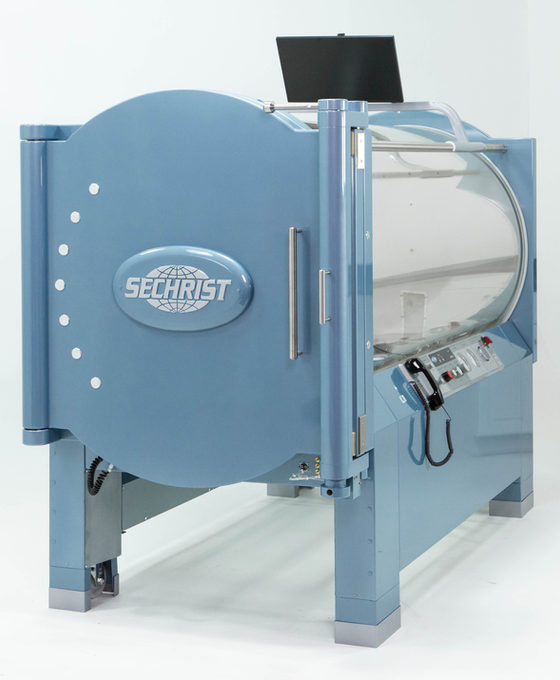
Rigid-shell monoplace units from Sechrist for hospitals and specialist clinics.
Carry-case designs from Summit to Sea. Travel-ready for athletes and mobile practitioners.
Multiplace systems from Perry Baromedical and Fink. 2–18 patient capacity, AERB docs.
The Detail
What Published Protocols Describe — and the Equipment
What HBOT for Crohn's/IBD involves (educational)
In the terms discussed in published hyperbaric literature, hyperbaric oxygen therapy places a person inside a sealed chamber at raised pressure so that more oxygen is absorbed than at normal atmospheric pressure. Where IBD is discussed, the referenced pressures generally sit around 2.0–2.5 ATA across a course of supervised sessions, with proposed mechanisms relating to oxygenation of inflamed or poorly-healing tissue and effects on inflammation. We present this only to inform your reading and your conversation with a doctor. It is not a protocol for you to follow, nor a claim that HBOT treats Crohn’s or colitis. Whether it has any role in a specific case is a specialist judgement to be made within gastroenterology care, not on the basis of a web page or a seller.
The refractory and perianal Crohn's focus
The published interest is concentrated, not general, and understanding where it sits prevents over-interpretation. The most-cited hyperbaric work in IBD concerns severe, refractory Crohn's disease and particularly perianal Crohn's — fistulas and wounds around the perineum that have resisted standard therapy. In those difficult cases, hyperbaric oxygen has been explored as an adjunct, conceptually close to its wound-healing use, within specialist settings and alongside conventional treatment. This is a narrow, developing area for a specific severe subset. It is not evidence that hyperbaric oxygen is a treatment for IBD in general, and anyone presenting it that way is overstating what the literature shows.
The evidence status — developing, specialist-led
Being precise about evidence status matters. For refractory and perianal Crohn’s, there is a body of exploratory work that specialists take seriously enough to study, but it remains developing rather than established, and it belongs within expert gastroenterology and colorectal care alongside conventional therapy. For general IBD, the evidence is weak and the claims correspondingly harder to justify. The practical upshot for a buyer is that no one should purchase equipment on the assumption that a chamber treats IBD; where hyperbaric oxygen is considered at all, it is as a specialist adjunct in specific severe cases, decided by doctors who know the full picture of a patient’s disease and the many established options.
Why this points to a hard (clinical) chamber
If a specialist is discussing a genuine hyperbaric protocol around 2.0–2.5 ATA, the equipment consequence is a clinical chamber. Those pressures exceed a mild soft chamber’s 1.3–1.5 ATA range, pointing to a rigid hard chamber — a monoplace unit for a single patient or a multiplace system for a facility. Because the relevant IBD use overlaps with wound-healing protocols, the equipment class is the same clinical chamber discussed for wound care, and a hospital already running such a chamber may consider these cases within existing capacity. Matching the chamber to what a specialist describes, across five brands, is our contribution.
A hospital and specialist-clinic decision
Because the credible hyperbaric use in IBD is confined to severe, specialist-managed cases, the equipment buyer here is typically a hospital or a colorectal or gastroenterology service, not a home user. For such a facility, the chamber is part of a broader clinical capability — often the same unit used for wound care and other recognised indications — and the decision is about capacity, throughput and integration with existing services. We size monoplace or multiplace equipment to realistic demand, provide the documentation biomedical and clinical teams require, and deliver, install and service the unit across India, while the clinical decisions about which patients, if any, are suitable stay entirely with the specialists.
India equipment, import and compliance
For an Indian facility the equipment practicalities are those of any clinical chamber: genuine sourcing, a landed cost for imported units covering freight, customs, GST and delivery, on-site installation and commissioning, and attention to oxygen handling and fire safety. AERB governs ionising radiation and is generally not the relevant clearance for a chamber; the meaningful documentation is the manufacturer’s pressure-vessel and build certification, which we supply. We act as importer of record, quote an all-in ₹ price, and remain the accountable India service contact for spares and AMC. Only genuine, documented units — never grey-market copies.
Home chambers are not the answer for IBD
It is worth stating plainly, because the internet sometimes suggests otherwise: a mild soft home chamber is not the equipment the credible IBD hyperbaric discussion points to. The relevant work involves clinical pressures and specialist supervision for severe, specific cases — not mild home use for general symptom management. If you encounter marketing suggesting a home chamber will help your Crohn’s or colitis, treat it with scepticism and take the question to your gastroenterologist. We will not sell a home chamber on an IBD premise, because that premise is not supported, and saying so is more useful to you than a sale.
Questions worth taking to a gastroenterologist
If hyperbaric oxygen has come up in the context of your IBD, a focused set of questions helps. Ask: does my situation fall into the specific, severe category — such as refractory or perianal Crohn’s — where hyperbaric oxygen has been studied, or is this a general IBD claim that the evidence does not support? If the former, how does it compare with the established medical and surgical options for my case, and would it be an adjunct rather than a replacement? What outcome should I expect, over what timeframe, and how would we judge success? Where would this be delivered, and at what cost? These questions keep the decision specialist-led and evidence-grounded. They also determine whether any chamber is appropriate and, if so, that it is a clinical one in a supervised setting — the only scenario in which our equipment role applies.
Cost, setting and realistic expectations
For the specific severe cases where hyperbaric oxygen is genuinely considered in IBD, it is worth being frank about cost and setting, because both point firmly toward institutions rather than individuals. A clinical hard chamber suitable for the 2.0–2.5 ATA protocols discussed starts around ₹15 lakh, with multiplace systems considerably higher, plus import, installation, oxygen supply and ongoing maintenance — investment that only makes sense for a facility treating a range of recognised indications, of which refractory Crohn’s might be one. Expectation-setting matters too: even in the cases where it is studied, hyperbaric oxygen is discussed as an adjunct within specialist care, not a stand-alone cure, and its role is judged case by case by the treating team. We provide the equipment economics honestly so a facility can weigh them against clinical need and alternative uses of the same capital, but the decision about which patients, if any, are suitable is entirely the specialists’.
How we would handle an IBD enquiry
When a facility or an individual contacts us about a chamber in the context of Crohn’s or colitis, we start by clarifying the scenario. For an individual describing general IBD symptoms, we explain honestly that the evidence does not support a chamber as a treatment and that a gastroenterologist should lead — we do not convert that into a home-chamber sale. For a hospital or specialist service exploring equipment for severe, refractory cases as part of a broader clinical capability, we move into a proper equipment conversation: the chamber class the protocol implies, whether it overlaps with existing wound-care capacity, monoplace versus multiplace sizing, the delivered India price, and installation and AMC. Throughout, we are explicit that we make no outcome claims and that clinical suitability is the specialists’ call. This split — cautious with individuals, straightforwardly useful with qualified institutions — is how we keep our equipment role honest on a topic where overstated claims are easy to make and hard to justify. It also plays to a genuine strength: because refractory Crohn’s hyperbaric use overlaps with wound care, a hospital adding or already running a clinical chamber for recognised wound and tissue-healing indications may be able to consider these cases within the same equipment and capacity, rather than justifying a chamber on IBD alone. We are well placed to help a facility think that through on the equipment side — sizing, brand comparison, documentation, import and AMC — while the clinical decisions about scope and patient selection remain, as they must, entirely with the specialists. For a facility weighing that overlap, we are happy to lay out how a single clinical chamber can serve several recognised indications at once, so the investment is judged on its full clinical utility rather than on any one condition in isolation.
Where the evidence is strongest — and where it is not
Within inflammatory bowel disease, the hyperbaric discussion is not uniform, and the distinction matters for anyone weighing it. The most-cited work concerns severe, refractory or perianal Crohn's disease — difficult cases involving fistulas or wounds that have not responded to standard therapy — where hyperbaric oxygen has been explored alongside conventional treatment in specialist settings, overlapping conceptually with its wound-healing use. Broader claims that hyperbaric oxygen is a general treatment for Crohn's or ulcerative colitis are on much weaker ground. So the honest picture is a narrow area of developing interest within a specific, severe subset, rather than a general IBD therapy. This is precisely the kind of nuance that marketing tends to flatten into a blanket claim, and precisely why a gastroenterologist, not an equipment seller, should decide whether it has any place in a given case.
Equipment, compliance and installation
Adding an HBOT capability is an equipment and facility decision as much as a clinical one. Beyond the chamber itself there is AERB and facility planning, oxygen supply and fire safety, installation, warranty and after-sales. As a multi-brand aggregator we bring the chamber options together, provide the technical documentation your facility and biomedical teams need, and coordinate delivery and installation across India. What we deliberately do not do is advise on clinical protocols or patient care — that stays with your medical team.
How we help — equipment only
To be clear about our role: TheHBOT.com supplies hyperbaric chambers and, where useful, builds them to specification on demand. We compare OxyHealth, Sechrist, Summit to Sea, Perry Baromedical and Fink, source genuine units, and deliver, install and support them across India. We do not provide therapy, run sessions, diagnose, or make claims about outcomes. If you or your facility, guided by a qualified doctor, decide to pursue HBOT for Crohn's disease and IBD, tell us the pressures your protocol calls for, your capacity and your city, and we will recommend the best-fit chamber and return a delivered India price — usually within one business day.
Buying Guide
If You're Evaluating a Chamber
For anyone considering crohn's disease & ibd HBOT equipment, tell us these and we can specify the right chamber.
Clinical pressures — What ATA does your protocol call for (per your doctors)?
Capacity — Single-patient monoplace, or multiplace for several?
Setting — Home, clinic, hospital or recovery centre?
Compliance — AERB and facility documentation needed?
City — Where should we deliver and install?
Explore Pricing & Options
Compare Before You Buy
Continue to the page that matches where you are in your decision.
FAQ
HBOT for Crohn's Disease & IBD — Questions
Common equipment questions — always confirm medical suitability with a doctor.