Read First
HBOT for Decompression Sickness — What It Involves
Quick answer: Decompression sickness is the original, firmly established hyperbaric indication, treated by urgent recompression — typically following established treatment tables around 2.8 ATA under medical supervision. It is an emergency handled by dive-medicine and hyperbaric teams, never at home; this page is about the facility equipment. This is educational information, not medical advice — consult a qualified doctor. If HBOT is pursued, the equipment involved is a hard (clinical) hyperbaric chamber, which TheHBOT supplies from ₹15 lakh.
Important — educational information only. This page summarises what published hyperbaric oxygen therapy (HBOT) research and clinician protocols discuss. It is not medical advice, a diagnosis, or a treatment plan, and makes no claim to treat, cure or prevent any condition. If you are considering HBOT, consult a qualified doctor. TheHBOT supplies hyperbaric chambers (equipment) — we do not provide therapy or run sessions.
Decompression sickness — known to divers as "the bends" — occurs when a reduction in surrounding pressure, typically during ascent from a dive, causes dissolved gases to form bubbles in the blood and tissues, producing symptoms that range from joint pain to serious neurological effects. Its treatment by recompression in a hyperbaric chamber is the original use of hyperbaric medicine and the most firmly established of all hyperbaric indications: the patient is recompressed and given oxygen, commonly following internationally recognised treatment tables around 2.8 ATA, under a clinical team, to shrink the bubbles and restore normal gas exchange.
As always, our role is equipment and our limits are firm. We are a multi-brand aggregator and on-demand manufacturer of hyperbaric chambers, not a clinic, a dive-medicine service or an emergency provider. We do not treat decompression sickness, we do not run sessions, and nothing here is clinical guidance. What we do is help a dive operation, diving programme, remote medical service or hospital choose, import, install and maintain the recompression chamber the indication requires. The clinical protocols, the treatment tables and the urgent decisions belong to dive-medicine and hyperbaric specialists.
This page is therefore written for facilities and programmes, not for individual divers. If you are a diver with symptoms, or with you a buddy who has them, this is not the place to be — contact emergency services or a diver emergency hotline and get expert assessment now. If you operate or plan a diving programme, a remote-site medical capability, or a hospital hyperbaric unit and are considering recompression equipment, the rest of this page covers what protocols describe, why it points to a clinical chamber, and how we help you acquire and support one across India, with a source to read further.
If you are a patient, the right first step is always a qualified doctor, who can advise whether HBOT is appropriate for your situation. If you are a clinic, recovery centre or hospital evaluating HBOT as a service, the equipment decision is where we help — comparing chambers across five brands, arranging documentation, and delivering and supporting the unit across India. The rest of this page covers what published protocols typically describe and which chamber matches, with a source to read further.
Summarises published protocols — not a diagnosis or treatment plan.
Whether HBOT suits you is a medical decision for a qualified doctor.
We source, deliver and install the chamber a protocol would use.
Clinics and hospitals: we compare, document and install the chamber.
India Pricing
The Chamber Decompression Sickness Protocols Would Use
Published decompression sickness discussions describe clinical pressures, which points to a hard (clinical) chamber. Indicative India price bands:
| Chamber Type | Pressure | Primary Buyer | Indicative India Price | Get Price |
|---|---|---|---|---|
| Soft / Portable | 1.3 – 1.5 ATA | Home, wellness, athletes | ₹3.5 – 12 lakh | Enquire → |
| Hard Monoplace | 1.5 – 3.0 ATA | Clinics, hospitals | ₹15 – 40 lakh | Enquire → |
| Hospital Multiplace | 2.0 – 3.0 ATA | Hospitals, wound-care | ₹40 lakh – 1.5 crore+ | Enquire → |
For the equipment detail see the hard chamber page. Read more on HBOT generally at Hyperbaric medicine.
Product Range
Which Chamber Type Matches Published Protocols
Here is how the chamber types compare, so you can see why decompression sickness discussions point to a hard chamber.
Inflatable fabric-shell units from OxyHealth and Summit to Sea. Compact, self-install.
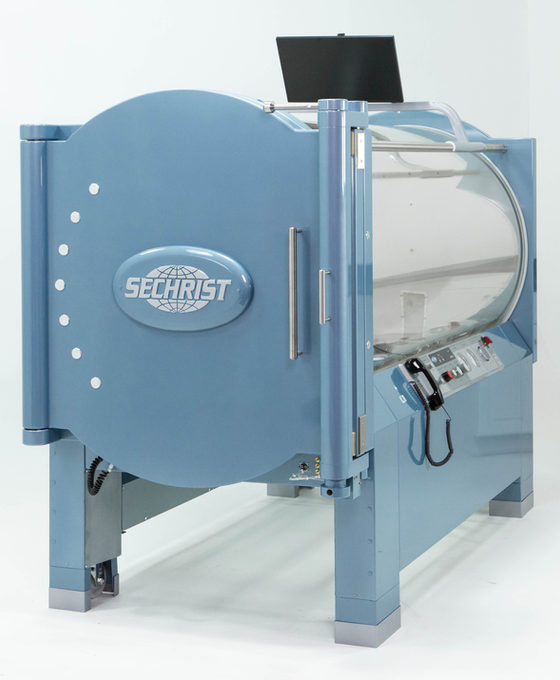
Rigid-shell monoplace units from Sechrist for hospitals and specialist clinics.
Carry-case designs from Summit to Sea. Travel-ready for athletes and mobile practitioners.
Multiplace systems from Perry Baromedical and Fink. 2–18 patient capacity, AERB docs.
The Detail
What Published Protocols Describe — and the Equipment
What recompression for DCS involves (educational)
In the terms used in dive medicine, treating decompression sickness means recompressing the patient in a hyperbaric chamber and administering oxygen, so that the bubbles of gas that formed on ascent are reduced in size and the excess gas is safely re-absorbed and cleared. Established treatment tables — recognised protocols used internationally — typically describe pressures around 2.8 ATA, with a defined sequence of pressure and oxygen over time, delivered urgently under a clinical team. We describe this only for general education and to explain the equipment implication; it is not clinical guidance, and the conduct of a recompression treatment is a specialist medical matter governed by those recognised tables and the treating team’s judgement.
The most established indication of all
Recompression for decompression sickness is not merely recognised — it is the foundational, most firmly established hyperbaric indication, the use from which the entire field grew. There is no serious question about the underlying rationale. That firm footing is worth stating because it explains the equipment landscape: dive operations, navies, commercial diving contractors and hyperbaric units invest in recompression chambers precisely because the need is well established and, for some operations, a regulatory or duty-of-care expectation. Where we help is ensuring that investment buys the right, genuine, well-supported chamber — the equipment question, not the clinical one.
Why this points to a clinical recompression chamber
The equipment consequence is unambiguous. Treatment-table pressures around 2.8 ATA and the supervised, sometimes prolonged nature of recompression rule out any soft or wellness chamber entirely and point to a purpose-built clinical recompression chamber. In practice this very often means a multiplace system, so that a dive-medicine attendant can be inside with the patient to monitor and manage a treatment that may last hours and involve a symptomatic or deteriorating diver. Monoplace chambers have a role, but the attended, higher-acuity nature of serious DCS treatment frequently favours multiplace capability. We match that clinical-grade equipment to a programme’s needs across five brands.
Attended multiplace and the dive-medicine context
The attended nature of recompression is central to the equipment choice. Serious decompression sickness can involve neurological symptoms and a patient who needs hands-on clinical care during a treatment that follows a defined table over an extended period. A multiplace chamber allows a trained inside attendant to be present throughout, which is why diving programmes and hyperbaric units serving DCS commonly prioritise multiplace systems with appropriate size, locks and monitoring. We help a facility weigh this against its acuity, location, expected caseload and budget, and specify a configuration that fits how recompression is actually delivered rather than a generic unit.
Remote sites, diving operations and duty of care
Decompression sickness equipment planning has a dimension most indications do not: location and operational duty of care. Commercial diving, offshore work, naval operations and remote dive tourism may be far from a hospital hyperbaric unit, which is why some operations maintain their own recompression capability or transportable chambers as part of their safety and regulatory framework. The right equipment answer depends heavily on that operational context — permanent facility versus deployable capability, expected diver numbers, and evacuation realities. We help operations think this through on the equipment side and source chambers suited to permanent or remote-site use, while dive-medicine protocols and emergency planning remain with their specialists.
Building or extending a hyperbaric facility
For a hospital or hyperbaric unit, recompression for DCS usually sits within a broader hyperbaric medicine service that also serves recognised indications such as carbon monoxide poisoning, wound care and radiation injury. The recompression chamber is the centrepiece, alongside oxygen supply, monitoring, trained staff and protocols. On the equipment side we bring the chamber options together, compare them on clinical capability, size, build quality, warranty and spares, and coordinate delivery and commissioning of what is a substantial installation — while the service design, dive-medicine expertise and clinical protocols sit with the facility’s specialists.
India equipment, import and compliance
For an Indian buyer — a coastal dive operation, a naval or commercial diving programme, or a hospital — the practicalities are those of a substantial clinical pressure system. Recompression and multiplace chambers are typically imported, so the honest figure is the landed, installed cost covering freight, customs, GST, delivery and on-site installation and commissioning. The facility side includes oxygen supply, electrical provision, fire safety and space or, for remote use, transport and siting. AERB governs ionising radiation and is generally not the relevant clearance for a chamber; the meaningful documentation is the manufacturer’s pressure-vessel and build certification, which we provide. We act as importer of record, quote an all-in ₹ figure, and remain the accountable India service and AMC contact.
Reliability and readiness are the whole point
For an emergency indication where a chamber may be the only appropriate treatment for a stricken diver, readiness is everything: the equipment must be available, safe and fully functional when an emergency arrives, sometimes after long periods of standby. That makes genuine build quality, dependable spares and a rigorous maintenance regime non-negotiable, not optional extras. We supply only genuine, documented chambers with manufacturer warranty and authentic spares, and we provide annual maintenance and responsive service across India, because for a recompression capability, uptime and safety are the entire justification for owning one. The aggregator model’s value here is the accountable, long-term support relationship, not just the initial sale.
For individual divers: this is an emergency, not a purchase
It must be said plainly, because a worried diver or buddy might land here: decompression sickness is a diving emergency, and it is not something an individual prepares for or manages with personal equipment. There is no consumer-equipment answer. If you or a fellow diver has symptoms after a dive — joint pain, numbness, weakness, confusion, breathing difficulty or anything unusual — the correct actions are to seek immediate expert help through emergency services or a diver emergency hotline, administer first aid and oxygen as trained, and arrange urgent assessment. We point divers toward that expert emergency pathway rather than toward buying a chamber, because that is what responsibility requires, and because this page is about facility equipment, not personal treatment.
Specifying recompression capability with a diving programme
When a diving programme, offshore operator or hospital approaches us about recompression equipment, the equipment brief is unusually shaped by operational reality, and that is where we add value. We begin with the programme’s own parameters: the depths and diving profiles involved, the number of divers and expected exposure, the distance to the nearest hospital hyperbaric unit and the evacuation realities, and whether the need is a permanent facility, a fixed on-site chamber, or a transportable capability for remote work. Those factors, far more than a generic spec sheet, drive the right answer — a coastal recreational-diving centre, an offshore commercial contractor and a naval programme have genuinely different requirements. From there we translate the brief into equipment: multiplace capability where attended treatment of a symptomatic diver over a long table is likely, appropriate chamber size, entry locks and monitoring, and, for remote operations, siting, transport and standby considerations. We compare suitable recompression chambers across global manufacturers on clinical capability, build quality, warranty and spares, and set out the delivered, installed and maintained cost in rupees, acting as importer of record for a substantial pressure system. Because readiness is the entire point of owning a recompression chamber, we place heavy emphasis on genuine build, dependable spares and a rigorous maintenance and standby-readiness regime, and we hold the accountable India service relationship long-term. Throughout, the dive-medicine side — the treatment tables, the clinical decisions, the emergency protocols — stays entirely with the programme’s qualified specialists; our role is simply to ensure the recompression capability they design is backed by the right, reliable, well-supported chamber. And because recompression assets often sit on standby for long periods between emergencies, we place particular emphasis with these buyers on a maintenance and readiness regime that keeps the chamber safe and immediately usable — scheduled servicing, genuine spares held against downtime, and a responsive India service contact — so that when a diver does need it, the equipment performs exactly as the programme’s emergency plan assumes it will. For a life-safety asset that may stand idle for months, that quiet, dependable readiness is not a detail — it is the whole reason the chamber exists, and it is the standard we hold every recompression installation we supply to.
The original hyperbaric use — and still an emergency
Decompression sickness holds a unique place: recompression treatment for divers is where hyperbaric medicine began, and it remains the most firmly established of all hyperbaric indications. That history gives this page a confident footing on the clinical rationale — but it changes nothing about our role or the emergency nature of the condition. Decompression sickness is an acute emergency: a diver showing symptoms needs urgent assessment by dive-medicine or emergency services and, where indicated, recompression in a chamber under a clinical team, often following internationally recognised treatment tables. It is not something a diver manages with personal equipment. We cover it because dive operations, naval and commercial diving programmes, remote-site medical services and hospitals build recompression chambers to serve it, and those are equipment buyers we can genuinely help. So this page speaks to facilities and programmes planning recompression capability, not to individual divers seeking treatment, and it offers no clinical guidance, which belongs to dive-medicine specialists.
Equipment, compliance and installation
Adding an HBOT capability is an equipment and facility decision as much as a clinical one. Beyond the chamber itself there is AERB and facility planning, oxygen supply and fire safety, installation, warranty and after-sales. As a multi-brand aggregator we bring the chamber options together, provide the technical documentation your facility and biomedical teams need, and coordinate delivery and installation across India. What we deliberately do not do is advise on clinical protocols or patient care — that stays with your medical team.
How we help — equipment only
To be clear about our role: TheHBOT.com supplies hyperbaric chambers and, where useful, builds them to specification on demand. We compare OxyHealth, Sechrist, Summit to Sea, Perry Baromedical and Fink, source genuine units, and deliver, install and support them across India. We do not provide therapy, run sessions, diagnose, or make claims about outcomes. If you or your facility, guided by a qualified doctor, decide to pursue HBOT for decompression sickness, tell us the pressures your protocol calls for, your capacity and your city, and we will recommend the best-fit chamber and return a delivered India price — usually within one business day.
Buying Guide
If You're Evaluating a Chamber
For anyone considering decompression sickness HBOT equipment, tell us these and we can specify the right chamber.
Clinical pressures — What ATA does your protocol call for (per your doctors)?
Capacity — Single-patient monoplace, or multiplace for several?
Setting — Home, clinic, hospital or recovery centre?
Compliance — AERB and facility documentation needed?
City — Where should we deliver and install?
Explore Pricing & Options
Compare Before You Buy
Continue to the page that matches where you are in your decision.
FAQ
HBOT for Decompression Sickness — Questions
Common equipment questions — always confirm medical suitability with a doctor.