Read First
HBOT for Gas Gangrene & Necrotising Infection — What It Involves
Quick answer: Gas gangrene (clostridial myonecrosis) and necrotising soft-tissue infections are among the recognised, urgent hyperbaric indications, used as an adjunct to emergency surgery and antibiotics. Hospital protocols typically describe pressures around 2.4–3.0 ATA. It is a life-threatening emergency — this page is about the hospital equipment. This is educational information, not medical advice — consult a qualified doctor. If HBOT is pursued, the equipment involved is a hard (clinical) hyperbaric chamber, which TheHBOT supplies from ₹15 lakh.
Important — educational information only. This page summarises what published hyperbaric oxygen therapy (HBOT) research and clinician protocols discuss. It is not medical advice, a diagnosis, or a treatment plan, and makes no claim to treat, cure or prevent any condition. If you are considering HBOT, consult a qualified doctor. TheHBOT supplies hyperbaric chambers (equipment) — we do not provide therapy or run sessions.
Gas gangrene — clostridial myonecrosis — and the broader group of necrotising soft-tissue infections (including necrotising fasciitis) are rapidly progressive, life-threatening infections that destroy tissue and can be fatal without immediate treatment. Their management is a surgical emergency: urgent surgical removal of dead tissue and aggressive antibiotics are the mainstays. Hyperbaric oxygen is one of the recognised hyperbaric indications in this setting, used in some cases as an adjunct alongside — never instead of — that emergency surgery and antibiotic therapy, on the rationale that high tissue-oxygen levels are hostile to the responsible organisms and support the surrounding tissue.
Our role and our limits are, as always, equipment-only. We are a multi-brand aggregator and on-demand manufacturer of hyperbaric chambers, not a clinic, a surgical service or an emergency provider. We do not treat these infections, we do not run sessions, and nothing here is clinical guidance. What we can do — the sole reason this page exists — is help a hospital or hyperbaric unit choose, import, install and maintain the clinical chamber the indication requires. The urgent clinical decisions, the surgery, the antibiotics and the hyperbaric protocol belong entirely to the treating surgical, infectious-disease and hyperbaric specialists.
So this page is written for institutions, not individuals, and with a clear warning attached. If you or someone near you may have such an infection — rapidly spreading redness, severe pain, swelling, systemic illness after a wound — this is a moment for emergency medical care now, not for reading about equipment. If you are a hospital with surgical and critical-care capability considering hyperbaric equipment to serve this and other recognised indications, the rest of this page covers what protocols describe, why it points to a clinical chamber, and how we help you acquire and support one across India, with a source to read further.
If you are a patient, the right first step is always a qualified doctor, who can advise whether HBOT is appropriate for your situation. If you are a clinic, recovery centre or hospital evaluating HBOT as a service, the equipment decision is where we help — comparing chambers across five brands, arranging documentation, and delivering and supporting the unit across India. The rest of this page covers what published protocols typically describe and which chamber matches, with a source to read further.
Summarises published protocols — not a diagnosis or treatment plan.
Whether HBOT suits you is a medical decision for a qualified doctor.
We source, deliver and install the chamber a protocol would use.
Clinics and hospitals: we compare, document and install the chamber.
India Pricing
The Chamber Gas Gangrene & Necrotising Infection Protocols Would Use
Published gas gangrene & necrotising infection discussions describe clinical pressures, which points to a hard (clinical) chamber. Indicative India price bands:
| Chamber Type | Pressure | Primary Buyer | Indicative India Price | Get Price |
|---|---|---|---|---|
| Soft / Portable | 1.3 – 1.5 ATA | Home, wellness, athletes | ₹3.5 – 12 lakh | Enquire → |
| Hard Monoplace | 1.5 – 3.0 ATA | Clinics, hospitals | ₹15 – 40 lakh | Enquire → |
| Hospital Multiplace | 2.0 – 3.0 ATA | Hospitals, wound-care | ₹40 lakh – 1.5 crore+ | Enquire → |
For the equipment detail see the hard chamber page. Read more on HBOT generally at Hyperbaric medicine.
Product Range
Which Chamber Type Matches Published Protocols
Here is how the chamber types compare, so you can see why gas gangrene & necrotising infection discussions point to a hard chamber.
Inflatable fabric-shell units from OxyHealth and Summit to Sea. Compact, self-install.
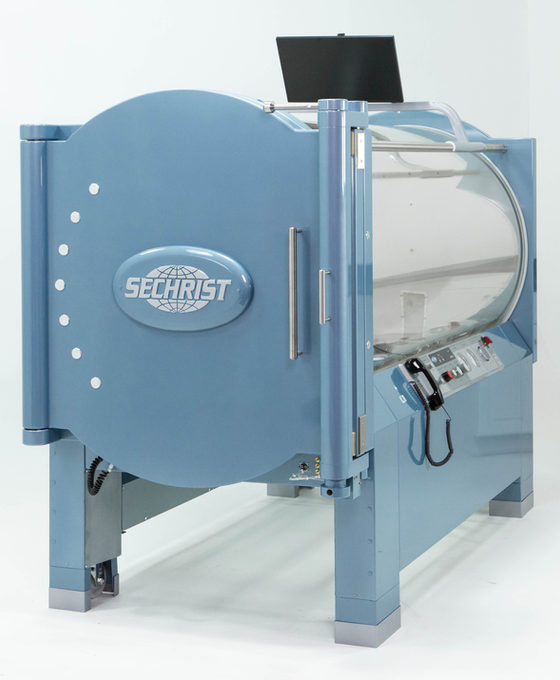
Rigid-shell monoplace units from Sechrist for hospitals and specialist clinics.
Carry-case designs from Summit to Sea. Travel-ready for athletes and mobile practitioners.
Multiplace systems from Perry Baromedical and Fink. 2–18 patient capacity, AERB docs.
The Detail
What Published Protocols Describe — and the Equipment
What HBOT for these infections involves (educational)
In hyperbaric medicine, hyperbaric oxygen for gas gangrene and necrotising infections places the patient in a sealed chamber at raised pressure breathing high oxygen concentrations, greatly increasing tissue oxygen, on the rationale that this is hostile to the anaerobic and mixed organisms involved and supports threatened tissue. Hospital protocols typically describe pressures around 2.4–3.0 ATA, delivered urgently and repeatedly in the acute phase, always as an adjunct to surgical debridement and antibiotics. We describe this only for education and to explain the equipment implication; it is not clinical guidance, and the use of hyperbaric oxygen in any case is a specialist judgement made within emergency surgical care.
Recognised — but always adjunctive
These infections are among the recognised hyperbaric indications, but the recognition comes with an essential qualifier that we will not let be lost: hyperbaric oxygen is adjunctive. The life-saving interventions are prompt, often repeated, surgical debridement and antibiotics; hyperbaric oxygen, where used, supports those. Any framing that presents a chamber as a primary treatment for gas gangrene or necrotising fasciitis is dangerously wrong. We state this firmly because it is a matter of patient safety, and because a responsible equipment supplier must never let the recognised status of the indication be misread as hyperbaric oxygen standing alone.
Why this points to a clinical chamber — often multiplace
The equipment consequence is firmly clinical and high-acuity. Pressures around 2.4–3.0 ATA rule out any soft chamber, and the emergency, critically-ill nature of these patients points to a rigid clinical chamber — very often a multiplace system, so that clinical staff can be inside with a severely unwell patient who may need monitoring or intervention during treatment. Monoplace chambers have a role, but the acuity of necrotising infection frequently favours attended multiplace capability. We match that clinical-grade equipment to a hospital’s critical-care and surgical context across five brands.
Attended multiplace and critical-care patients
Patients with gas gangrene or necrotising infection are often critically ill, sometimes requiring intensive support, which makes the attended nature of a multiplace chamber clinically important — staff can be present to manage the patient during treatment. This is why hospitals serving such emergencies, alongside their surgical and critical-care services, commonly prioritise multiplace capability with appropriate size, locks and monitoring interfaces. We help a facility weigh acuity, expected caseload, space and budget, and specify a configuration suited to treating unstable patients, not a generic unit.
Integration with surgery and critical care
Because the treatment is inseparable from urgent surgery and intensive care, the hyperbaric capability for these infections belongs in a hospital with those services — not a standalone wellness setting. The chamber sits within an ecosystem of operating theatres, critical care, infectious-disease expertise and imaging. On the equipment side, we ensure the chamber and its interfaces suit that high-acuity environment; the clinical integration and decision-making are entirely the hospital’s. This reinforces, again, that the buyer is a capable institution, and that hyperbaric oxygen is one supported element of intensive, multidisciplinary emergency care.
Part of a broader hyperbaric service
As with other emergency indications, a hospital does not usually justify a chamber on necrotising infection alone — these cases, while critical, are relatively infrequent. The chamber serves a broader hyperbaric service covering wound care, diabetic foot, radiation injury, carbon monoxide poisoning and other recognised indications, with the emergency infections handled within that capability when they arise. We help a facility size the chamber to the full basket of indications so the emergency capability exists when needed while the equipment is well-utilised the rest of the time.
India equipment, import and compliance
For an Indian hospital the practicalities are those of a substantial, high-acuity clinical installation. Clinical and multiplace chambers are typically imported, so the honest figure is the landed, installed cost — freight, customs, GST, delivery and on-site installation and commissioning. The facility side includes oxygen supply, electrical provision, fire safety and integration with critical-care areas. AERB governs ionising radiation and is generally not the relevant clearance for a chamber; the meaningful documentation is the manufacturer’s pressure-vessel and build certification, which we provide. We act as importer of record, quote an all-in ₹ figure, and remain the accountable India service and AMC contact.
Readiness for an emergency indication
For a life-threatening emergency where hyperbaric oxygen may be needed urgently and repeatedly in the acute phase, equipment readiness is a clinical necessity: the chamber must be safe and available when an emergency arrives. That makes genuine build quality, dependable spares and a rigorous maintenance regime essential, not optional. We supply only genuine, documented chambers with manufacturer warranty and authentic spares, and provide annual maintenance and responsive service across India, because for a hospital serving emergency indications, uptime and safety are the whole justification for the capability. The aggregator model’s value is the accountable, long-term support relationship, not just the sale.
A safety-first message for the public
It bears repeating with emphasis, because search can bring a frightened person to a page like this: gas gangrene and necrotising infections are life-threatening surgical emergencies, and hyperbaric oxygen is at most an adjunct to urgent surgery and antibiotics. There is no home-equipment answer, and no version of this that should delay emergency care by even a moment. If you suspect such an infection — a wound with rapidly spreading redness, disproportionate pain, swelling, or feeling systemically unwell — seek emergency medical help immediately. We point people toward that emergency pathway rather than toward equipment, because on this indication above all, that is what responsibility demands.
Space, siting and critical-care integration
For a hospital planning capability that includes necrotising infections, the equipment conversation is inseparable from where and how the chamber is sited, because these patients are often critically ill and cannot be treated in isolation from intensive support. A multiplace chamber serving high-acuity emergencies needs appropriate siting relative to critical care and theatres, adequate space and access for moving an unstable patient, oxygen and electrical provision engineered for a substantial system, and monitoring interfaces that let staff manage a patient inside the chamber. These are equipment and facility-engineering questions we help work through — chamber size, locks, interfaces, and the services the installation requires — in dialogue with the hospital’s biomedical, critical-care and surgical teams. We do not design the clinical pathway or decide how emergencies are routed; we ensure that the chamber a hospital chooses physically and technically fits the high-acuity environment it must operate in, so that when a critically ill patient needs it, the equipment supports rather than constrains their care.
How a hospital equipment enquiry works with us
When a hospital with surgical and critical-care capability approaches us about a chamber that will serve necrotising infections among other indications, we start from the clinical and operational brief its teams provide: the pressures protocols require, the acuity of patients expected, whether attended treatment of an unstable patient is needed, the caseload across all the recognised indications the chamber will cover, and the space and services available. We translate that into equipment — very often multiplace capability given the acuity, with appropriate size, locks, monitoring and oxygen interfaces — and compare suitable models across five global manufacturers so the hospital is not locked to one maker. We then set out the delivered, installed and maintained ₹ cost, act as importer of record for a substantial pressure system, and commit to being the accountable India service and AMC contact, with particular emphasis on the reliability an emergency capability demands. Throughout, the clinical brief stays entirely with the hospital’s surgical, infectious-disease and hyperbaric specialists — which patients, when, in what relationship to surgery and antibiotics. Our role is only to ensure the equipment behind their emergency capability is the right one, genuinely sourced, correctly installed for a high-acuity setting, and dependably supported. And because a chamber that may be called on for a life-threatening emergency cannot afford unplanned downtime, we place unusual weight, with these buyers, on a maintenance and spares regime engineered for readiness — scheduled preventive servicing, critical spares held against failures, and a responsive India service contact — so that the equipment performs exactly as the hospital’s emergency protocols assume it will, on the rare but critical occasions it is needed. In short, we are glad to be the equipment partner behind a capable hospital’s emergency and multi-indication hyperbaric service, and equally clear that the clinical judgement — surgery, antibiotics, and the role of hyperbaric oxygen within them — remains, as it must, entirely with the treating specialists.
A surgical emergency — hyperbaric oxygen is an adjunct, not a substitute
One point governs everything on this page and must lead: gas gangrene and necrotising soft-tissue infections are life-threatening surgical emergencies, and where hyperbaric oxygen has a role it is strictly as an adjunct alongside urgent surgery and antibiotics — never a substitute for them. No one experiencing such an infection should be anywhere near a discussion of buying equipment; they need emergency hospital care immediately. We cover this indication because hospitals with surgical and critical-care services build hyperbaric capability to serve it among other recognised uses, and those institutions are equipment buyers we can help. So this page speaks only to hospitals and hyperbaric units planning capability, it makes no attempt to guide clinical care, which belongs wholly to the surgical, infectious-disease and hyperbaric specialists, and it should not be read by anyone as suggesting hyperbaric oxygen replaces emergency surgery.
Equipment, compliance and installation
Adding an HBOT capability is an equipment and facility decision as much as a clinical one. Beyond the chamber itself there is AERB and facility planning, oxygen supply and fire safety, installation, warranty and after-sales. As a multi-brand aggregator we bring the chamber options together, provide the technical documentation your facility and biomedical teams need, and coordinate delivery and installation across India. What we deliberately do not do is advise on clinical protocols or patient care — that stays with your medical team.
How we help — equipment only
To be clear about our role: TheHBOT.com supplies hyperbaric chambers and, where useful, builds them to specification on demand. We compare OxyHealth, Sechrist, Summit to Sea, Perry Baromedical and Fink, source genuine units, and deliver, install and support them across India. We do not provide therapy, run sessions, diagnose, or make claims about outcomes. If you or your facility, guided by a qualified doctor, decide to pursue HBOT for gas gangrene and necrotising soft-tissue infection, tell us the pressures your protocol calls for, your capacity and your city, and we will recommend the best-fit chamber and return a delivered India price — usually within one business day.
Buying Guide
If You're Evaluating a Chamber
For anyone considering gas gangrene & necrotising infection HBOT equipment, tell us these and we can specify the right chamber.
Clinical pressures — What ATA does your protocol call for (per your doctors)?
Capacity — Single-patient monoplace, or multiplace for several?
Setting — Home, clinic, hospital or recovery centre?
Compliance — AERB and facility documentation needed?
City — Where should we deliver and install?
Explore Pricing & Options
Compare Before You Buy
Continue to the page that matches where you are in your decision.
FAQ
HBOT for Gas Gangrene & Necrotising Infection — Questions
Common equipment questions — always confirm medical suitability with a doctor.