Read First
HBOT for Lyme Disease — What It Involves
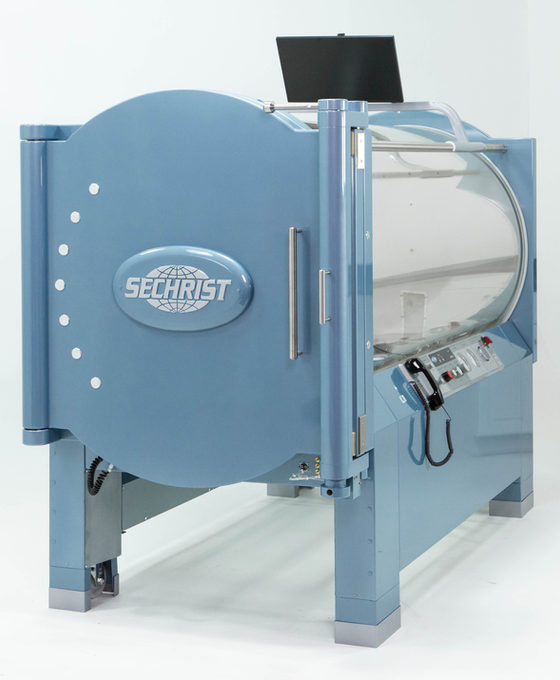
Quick answer: Published hyperbaric discussions of Lyme disease typically describe clinical pressures around 2.0–2.4 ATA, but the evidence is limited and the broader concept of "chronic Lyme" is medically contested; any decision belongs firmly with a qualified doctor. This is educational information, not medical advice — consult a qualified doctor. If HBOT is pursued, the equipment involved is a hard (clinical) hyperbaric chamber, which TheHBOT supplies from ₹15 lakh.
Important — educational information only. This page summarises what published hyperbaric oxygen therapy (HBOT) research and clinician protocols discuss. It is not medical advice, a diagnosis, or a treatment plan, and makes no claim to treat, cure or prevent any condition. If you are considering HBOT, consult a qualified doctor. TheHBOT supplies hyperbaric chambers (equipment) — we do not provide therapy or run sessions.
Lyme disease is an infection transmitted by tick bites, caused by Borrelia bacteria, and in its acute form it is a recognised condition with established antibiotic treatment. It appears in published hyperbaric oxygen literature, but the context matters enormously: most of the hyperbaric interest concerns persistent post-treatment symptoms — frequently described as "chronic Lyme" — which is an area of significant and unresolved medical controversy. Expert organisations differ on how these persistent symptoms should be understood and managed, and the evidence for hyperbaric oxygen specifically is limited.
We are setting this out carefully because it directly affects any equipment decision, and because the space around chronic Lyme contains a great deal of overstated marketing that a responsible supplier should not add to. Our purpose on this page is narrow: to explain, for general education, what published hyperbaric discussions involve, and then to help with the part we are qualified for — supplying the hyperbaric chamber (the equipment) that a clinical protocol would use, if a doctor guides you toward one. We are a multi-brand aggregator and on-demand manufacturer, not a clinic. We do not diagnose Lyme, we do not treat it, we do not run sessions, and we make no claim that a chamber will help any form of Lyme disease.
If you are living with Lyme or persistent symptoms after treatment, a qualified doctor — ideally one experienced in infectious disease — is the right person to lead, and to help you navigate an area where unproven and costly therapies are common. If you are a clinic evaluating hyperbaric equipment, the chamber decision is where we add value, on strictly equipment terms. The rest of this page covers what protocols discuss, why the evidence and the wider debate call for caution, and which chamber matches, with a source to read further.
If you are a patient, the right first step is always a qualified doctor, who can advise whether HBOT is appropriate for your situation. If you are a clinic, recovery centre or hospital evaluating HBOT as a service, the equipment decision is where we help — comparing chambers across five brands, arranging documentation, and delivering and supporting the unit across India. The rest of this page covers what published protocols typically describe and which chamber matches, with a source to read further.
Summarises published protocols — not a diagnosis or treatment plan.
Whether HBOT suits you is a medical decision for a qualified doctor.
We source, deliver and install the chamber a protocol would use.
Clinics and hospitals: we compare, document and install the chamber.
India Pricing
The Chamber Lyme Disease Protocols Would Use
Published lyme disease discussions describe clinical pressures, which points to a hard (clinical) chamber. Indicative India price bands:
| Chamber Type | Pressure | Primary Buyer | Indicative India Price | Get Price |
|---|---|---|---|---|
| Soft / Portable | 1.3 – 1.5 ATA | Home, wellness, athletes | ₹3.5 – 12 lakh | Enquire → |
| Hard Monoplace | 1.5 – 3.0 ATA | Clinics, hospitals | ₹15 – 40 lakh | Enquire → |
| Hospital Multiplace | 2.0 – 3.0 ATA | Hospitals, wound-care | ₹40 lakh – 1.5 crore+ | Enquire → |
For the equipment detail see the hard chamber page. Read more on HBOT generally at Hyperbaric medicine.
Product Range
Which Chamber Type Matches Published Protocols
Here is how the chamber types compare, so you can see why lyme disease discussions point to a hard chamber.
Inflatable fabric-shell units from OxyHealth and Summit to Sea. Compact, self-install.
Rigid-shell monoplace units from Sechrist for hospitals and specialist clinics.
Carry-case designs from Summit to Sea. Travel-ready for athletes and mobile practitioners.
Multiplace systems from Perry Baromedical and Fink. 2–18 patient capacity, AERB docs.
The Detail
What Published Protocols Describe — and the Equipment
What HBOT for Lyme involves (educational)
In the terms discussed in published hyperbaric literature, hyperbaric oxygen therapy places a person inside a sealed chamber at raised pressure so that more oxygen is absorbed than at normal atmospheric pressure. Where Lyme is discussed, the referenced pressures generally sit around 2.0–2.4 ATA across a course of supervised sessions, with proposed rationales relating to oxygen’s effects on bacteria and inflammation. We present this only to inform your reading and your conversation with a doctor. It is not a protocol for you to follow, and emphatically not a claim that HBOT eradicates Borrelia or resolves Lyme symptoms. Whether any such approach has a place in an individual case is a medical judgement, and in Lyme specifically it is one that should be made within recognised, evidence-based care rather than outside it.
Acute Lyme versus contested "chronic Lyme"
The single most important thing to understand is the distinction between two very different situations. Acute Lyme disease is a recognised infection with established antibiotic treatment, and that is not where hyperbaric oxygen is typically proposed. The hyperbaric discussion clusters around persistent symptoms after treatment — the contested "chronic Lyme" category — where the medical community genuinely disagrees about mechanism, diagnosis and management. Conflating the two is how a lot of misleading marketing operates: borrowing the legitimacy of a real infection to sell unproven therapies for a disputed syndrome. We keep the two firmly separate, and we point anyone with these concerns toward a qualified doctor rather than toward equipment.
The evidence — limited, and inside a contested field
Being precise about evidence status is essential here. The published hyperbaric studies relating to Lyme are limited, and they sit inside a broader field where even the underlying framework of chronic Lyme is disputed by major expert bodies. That combination — thin direct evidence, contested surrounding clinical concepts — is a strong reason for caution, and a strong reason not to buy equipment on the basis of a proven Lyme benefit, because no such proof exists. This is not a niche caveat; it is central to making an informed decision, and it is exactly the kind of context that high-pressure sellers in this space tend to omit.
Why persistent-symptom sufferers deserve extra care
People with long-standing symptoms after Lyme treatment are often exhausted, disbelieved, and understandably willing to try almost anything — which makes them a target for costly, unproven interventions. We think the ethical response is to be a source of caution rather than another confident pitch. That means being clear that hyperbaric oxygen for chronic Lyme is unproven, that large sums are routinely spent in this space on therapies without solid evidence, and that a doctor grounded in evidence-based medicine is the right guide. None of that is a comfortable sales message, and that is rather the point: a supplier willing to say it is one you can trust more than one who is not.
Why a hyperbaric protocol points to a hard chamber
If, despite the caveats, a doctor is discussing a genuine hyperbaric protocol around 2.0–2.4 ATA, the equipment consequence is a clinical chamber. Those pressures exceed a mild soft chamber’s 1.3–1.5 ATA range, pointing to a rigid hard chamber — a monoplace unit for a single patient, or a multiplace system for a facility treating several. Soft home chambers are not the equipment such a protocol would use. Matching the chamber’s pressure capability to what a doctor actually specifies, across five brands, is the part we can genuinely help with, and the only part we claim competence in.
Chamber configuration and the clinic decision
For a clinic weighing hyperbaric equipment, configuration follows expected use. A monoplace hard chamber suits single-patient sessions and a lower capital outlay; a multiplace system suits higher throughput at greater cost and space. Given the contested evidence around Lyme specifically, we would encourage any clinic to be clear-eyed about the basis on which it offers such services, but that clinical and ethical judgement is theirs, not ours. On the equipment side we size the chamber to realistic demand, provide the documentation a biomedical team needs, and deliver, install and service the unit across India.
India equipment, import and compliance
For an Indian buyer the equipment practicalities mirror other clinical chambers: genuine sourcing, a landed cost for imported units covering freight, customs, GST and delivery, on-site installation and commissioning, and attention to oxygen handling and fire safety. AERB governs ionising radiation and is generally not the relevant clearance for a chamber; the meaningful documentation is the manufacturer’s pressure-vessel and build certification, which we provide with every genuine unit. We act as importer of record, quote an all-in ₹ price, and remain the accountable India service contact for spares and AMC. We never supply grey-market copies.
Questions worth taking to a doctor
If you are considering hyperbaric oxygen for Lyme or persistent post-Lyme symptoms, a focused set of questions helps keep the decision grounded. Ask: is my situation acute Lyme, which has established treatment, or persistent symptoms after treatment, which is contested? Given the limited and contested evidence, do you see any legitimate role for hyperbaric oxygen, and how does it compare with evidence-based approaches to my symptoms? What would you expect it to achieve, over what timeframe, and how would we judge whether to stop? What is the total cost, and is it justified relative to alternatives? Am I at risk of being sold an unproven therapy? These questions turn a heavily-marketed option into an informed one, and they clarify whether any chamber is appropriate — the only point at which our equipment role becomes relevant, and one we will fill honestly or decline.
Red flags in the chronic-Lyme marketplace
Because the space around persistent Lyme symptoms is both emotionally charged and commercially active, knowing the warning signs is genuinely protective. Be wary of any provider or seller who guarantees a Lyme "cure", who bundles hyperbaric oxygen with a long list of other unproven therapies at high cost, or who frames mainstream, evidence-based medicine as a conspiracy against alternative treatments. Be cautious of testimonials presented in place of evidence, of pressure to commit quickly or to buy a home chamber, and of pricing that runs into very large sums for protocols with no solid trial support. These patterns are common in this field, and they are precisely why a doctor grounded in evidence-based medicine should be your anchor. A trustworthy equipment supplier will name these red flags rather than exploit them, will decline to make Lyme claims, and will happily lose a sale to a clearer-headed decision — which is the standard we hold ourselves to.
How we would handle a Lyme enquiry — and the cost reality
When someone contacts us about a chamber for Lyme, our response is deliberately not a quote. We first ask whether they are dealing with acute Lyme, which has established treatment, or persistent post-treatment symptoms, and whether a doctor has actually recommended hyperbaric oxygen. We explain, plainly, that the evidence is limited and the field contested, and that we make no claim a chamber helps. If, after that, a doctor has genuinely specified a clinical protocol, we discuss the equipment honestly: a hard chamber in the 2.0–2.4 ATA range means a clinical unit from around ₹15 lakh, plus import, installation and running costs — real money that should be weighed against evidence-based alternatives. Many people are surprised that an equipment company will actively slow them down and question the premise; we think that is exactly what integrity requires on a condition where so many are sold so much for so little proof. If a chamber is genuinely part of a doctor-led plan, we supply the right one; if not, we say so and lose the sale without complaint. And when a clinic does proceed on a sound clinical basis, the value we add is squarely equipment: comparing genuine units across five global brands so the facility is not locked to one maker, arranging the pressure-vessel documentation its biomedical team needs, handling import as the importer of record so there are no surprise customs costs, and remaining the accountable India contact for spares and annual maintenance long after the sale. That is a role we can fill with full confidence, precisely because it makes no medical claim at all.
Why "chronic Lyme" makes honesty especially important here
Lyme disease deserves unusually careful handling because it sits at the centre of a genuine medical controversy. Acute Lyme disease, following a tick bite, is a recognised infection with established antibiotic treatment. The contested territory is the cluster of persistent symptoms some people experience afterwards — often labelled "chronic Lyme" — where expert bodies disagree about cause, diagnosis and treatment, and where a large and sometimes predatory market of unproven therapies has grown up. Hyperbaric oxygen is one of the options marketed into that space. We raise this not to take sides in a complex clinical debate we are not qualified to settle, but because a buyer deserves to know they are entering contested ground where confident claims should be treated with particular scepticism. Our position is simple and consistent: we are an equipment supplier, we make no claim that a chamber addresses Lyme in any form, and we would rather a person spend their money guided by a doctor than by marketing — including our own.
Equipment, compliance and installation
Adding an HBOT capability is an equipment and facility decision as much as a clinical one. Beyond the chamber itself there is AERB and facility planning, oxygen supply and fire safety, installation, warranty and after-sales. As a multi-brand aggregator we bring the chamber options together, provide the technical documentation your facility and biomedical teams need, and coordinate delivery and installation across India. What we deliberately do not do is advise on clinical protocols or patient care — that stays with your medical team.
How we help — equipment only
To be clear about our role: TheHBOT.com supplies hyperbaric chambers and, where useful, builds them to specification on demand. We compare OxyHealth, Sechrist, Summit to Sea, Perry Baromedical and Fink, source genuine units, and deliver, install and support them across India. We do not provide therapy, run sessions, diagnose, or make claims about outcomes. If you or your facility, guided by a qualified doctor, decide to pursue HBOT for Lyme disease, tell us the pressures your protocol calls for, your capacity and your city, and we will recommend the best-fit chamber and return a delivered India price — usually within one business day.
Buying Guide
If You're Evaluating a Chamber
For anyone considering lyme disease HBOT equipment, tell us these and we can specify the right chamber.
Clinical pressures — What ATA does your protocol call for (per your doctors)?
Capacity — Single-patient monoplace, or multiplace for several?
Setting — Home, clinic, hospital or recovery centre?
Compliance — AERB and facility documentation needed?
City — Where should we deliver and install?
Explore Pricing & Options
Compare Before You Buy
Continue to the page that matches where you are in your decision.
FAQ
HBOT for Lyme Disease — Questions
Common equipment questions — always confirm medical suitability with a doctor.