Read First
HBOT for Radiation Injury (Osteoradionecrosis) — What It Involves
Quick answer: Late radiation tissue injury and osteoradionecrosis are among the recognised, established indications for hyperbaric oxygen. Hospital protocols typically describe clinical pressures around 2.0–2.4 ATA across a course of many supervised sessions. It is specialist hospital care — this page is about the clinical equipment. This is educational information, not medical advice — consult a qualified doctor. If HBOT is pursued, the equipment involved is a hard (clinical) hyperbaric chamber, which TheHBOT supplies from ₹15 lakh.
Important — educational information only. This page summarises what published hyperbaric oxygen therapy (HBOT) research and clinician protocols discuss. It is not medical advice, a diagnosis, or a treatment plan, and makes no claim to treat, cure or prevent any condition. If you are considering HBOT, consult a qualified doctor. TheHBOT supplies hyperbaric chambers (equipment) — we do not provide therapy or run sessions.
Radiation therapy is a cornerstone of cancer treatment, but in a minority of patients it leaves behind late tissue injury — damaged, poorly-healing tissue in the treated area that can appear months or years afterwards. Two of the better-known forms are osteoradionecrosis, where irradiated bone (often in the jaw) fails to heal, and soft-tissue radionecrosis. Hyperbaric oxygen is one of the long-recognised, established uses of a hyperbaric chamber in this context, delivered in hospital under specialist supervision, typically over an extended course, to improve oxygenation and support healing in the compromised tissue.
As always, our role is equipment and our limits are firm. We are a multi-brand aggregator and on-demand manufacturer of hyperbaric chambers, not a clinic or an oncology service. We do not treat radiation injury, we do not run sessions, and nothing here is clinical guidance. What we can do — the only reason this page exists — is help a hospital, cancer centre or hyperbaric unit choose, import, install and maintain the clinical chamber such an indication requires. The protocols, the patient selection and the care belong to the treating oncology, surgical, maxillofacial and hyperbaric specialists.
So this page is written for institutions, not individuals. If you are a patient dealing with a radiation-injury complication, your treating team is the right source of guidance, and hyperbaric oxygen, where appropriate, is arranged through hospital care. If you are a hospital or hyperbaric facility considering the equipment to serve radiation injury alongside other recognised indications, the rest of this page covers what protocols typically describe, why it points to a clinical chamber, and how we help you acquire and support one across India, with a source to read further.
If you are a patient, the right first step is always a qualified doctor, who can advise whether HBOT is appropriate for your situation. If you are a clinic, recovery centre or hospital evaluating HBOT as a service, the equipment decision is where we help — comparing chambers across five brands, arranging documentation, and delivering and supporting the unit across India. The rest of this page covers what published protocols typically describe and which chamber matches, with a source to read further.
Summarises published protocols — not a diagnosis or treatment plan.
Whether HBOT suits you is a medical decision for a qualified doctor.
We source, deliver and install the chamber a protocol would use.
Clinics and hospitals: we compare, document and install the chamber.
India Pricing
The Chamber Radiation Injury (Osteoradionecrosis) Protocols Would Use
Published radiation injury (osteoradionecrosis) discussions describe clinical pressures, which points to a hard (clinical) chamber. Indicative India price bands:
| Chamber Type | Pressure | Primary Buyer | Indicative India Price | Get Price |
|---|---|---|---|---|
| Soft / Portable | 1.3 – 1.5 ATA | Home, wellness, athletes | ₹3.5 – 12 lakh | Enquire → |
| Hard Monoplace | 1.5 – 3.0 ATA | Clinics, hospitals | ₹15 – 40 lakh | Enquire → |
| Hospital Multiplace | 2.0 – 3.0 ATA | Hospitals, wound-care | ₹40 lakh – 1.5 crore+ | Enquire → |
For the equipment detail see the hard chamber page. Read more on HBOT generally at Hyperbaric medicine.
Product Range
Which Chamber Type Matches Published Protocols
Here is how the chamber types compare, so you can see why radiation injury (osteoradionecrosis) discussions point to a hard chamber.
Inflatable fabric-shell units from OxyHealth and Summit to Sea. Compact, self-install.
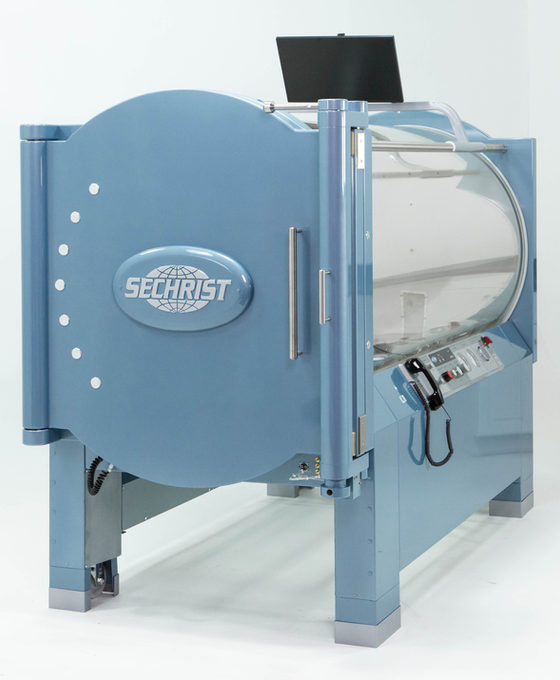
Rigid-shell monoplace units from Sechrist for hospitals and specialist clinics.
Carry-case designs from Summit to Sea. Travel-ready for athletes and mobile practitioners.
Multiplace systems from Perry Baromedical and Fink. 2–18 patient capacity, AERB docs.
The Detail
What Published Protocols Describe — and the Equipment
What HBOT for radiation injury involves (educational)
In the terms used in hyperbaric medicine, hyperbaric oxygen therapy for late radiation injury places the patient in a sealed chamber and raises the pressure while they breathe high concentrations of oxygen, greatly increasing the oxygen delivered to tissue that radiation has left poorly vascularised and hypoxic. Hospital protocols typically describe clinical pressures around 2.0–2.4 ATA, delivered across a substantial course of daily sessions — often many weeks of treatment — under specialist supervision, sometimes in defined relationship to surgery. We describe this only for general education and to explain the equipment implication; it is not clinical guidance, and the decision to use hyperbaric oxygen for a given patient is a specialist judgement.
A recognised indication — the settled part
Late radiation tissue injury, including osteoradionecrosis, is among the indications for which hyperbaric oxygen has long been recognised in hyperbaric medicine. As with any area of medicine there are ongoing refinements — patient selection, the relationship to surgery, protocol details — but the underlying rationale, supporting the healing of hypoxic irradiated tissue with hyperbaric oxygen, is well established. We note this because it explains why cancer centres and hospitals invest in chambers: radiation injury is one of a set of recognised indications a clinical chamber serves, and that recognised status makes the equipment conversation straightforward rather than caveated.
Why this points to a hard clinical chamber
The equipment consequence is clear and firmly clinical. Pressures around 2.0–2.4 ATA are well beyond a mild soft chamber, and the long, supervised, hospital-based nature of the treatment rules out any home or wellness unit. This points to a rigid hard chamber built for clinical pressures — a monoplace clinical chamber, or a multiplace system in which staff can attend and several patients can be treated. Because radiation-injury courses are long and involve many sessions, throughput and reliability matter, which often favours multiplace capability in a busy unit. We match that clinical-grade equipment to a hospital’s protocols across five brands.
Monoplace versus multiplace for a radiation-injury service
The long, high-volume nature of radiation-injury treatment shapes the configuration choice. A single course can involve dozens of sessions per patient, so a unit serving several such patients concurrently needs throughput. A monoplace chamber treats one patient at a time and suits lower volume or a focused service; a multiplace system treats several together and is often preferred where a cancer centre expects steady radiation-injury and wound caseloads. We help a facility model realistic volume — radiation injury plus other recognised indications — and size monoplace or multiplace capacity so the chamber is neither a bottleneck nor idle.
Part of a broader hyperbaric medicine service
A hospital rarely buys a chamber for radiation injury alone; it builds a hyperbaric medicine service that also covers wound care, diabetic foot, certain infections, carbon monoxide poisoning and other recognised indications. Radiation injury is often a significant, steady component of such a service, particularly at cancer centres. The chamber is the centrepiece, alongside oxygen supply, monitoring, trained staff and protocols. On the equipment side we bring the chamber options together and coordinate delivery and commissioning, while the clinical service design and protocols sit with the hospital’s specialists.
The link with surgery and maxillofacial care
Osteoradionecrosis of the jaw in particular is frequently managed in coordination with maxillofacial and surgical teams, sometimes with hyperbaric oxygen used in a defined relationship to dental extractions or reconstructive surgery in irradiated fields. This multidisciplinary character is a clinical matter entirely for those teams; we mention it only because it means the hyperbaric equipment often sits within a hospital that also runs surgical and oncology services, reinforcing that the buyer is an institution building integrated capability, not an individual. We supply and support the chamber; the coordination of care is the specialists’.
India equipment, import and compliance
For an Indian hospital or cancer centre, the equipment practicalities are those of a substantial clinical installation. Clinical and multiplace chambers are typically imported, so the honest figure is the landed, installed cost — freight, customs, GST, delivery and on-site installation and commissioning of a significant pressure system. There is also the facility side: oxygen supply, electrical provision, fire safety and space. AERB governs ionising radiation and is generally not the relevant clearance for a chamber; the meaningful documentation is the manufacturer’s pressure-vessel and build certification, which we provide. We act as importer of record, quote an all-in ₹ figure, and remain the accountable India service and AMC contact.
Reliability and utilisation over long courses
Because radiation-injury treatment runs over long courses of many sessions, chamber reliability and uptime are not conveniences but service necessities — a chamber out of action disrupts a patient’s continuity of treatment. That raises the importance of genuine, well-documented units with dependable spares and a serious maintenance programme. We supply only genuine chambers with manufacturer warranty and authentic spares, and offer annual maintenance and responsive service across India, because for a hyperbaric service running long protocols, sustained uptime is central to the value of the investment. The aggregator model’s worth here is the accountable, long-term support relationship.
Building the business and clinical case together
When we help a cancer centre or hospital plan hyperbaric equipment, we encourage building the case across the full basket of recognised indications a chamber serves — radiation injury, wound care, diabetic foot, infections, carbon monoxide — because that combined, steadier utilisation supports the investment better than any single indication. Radiation injury is often a strong, predictable contributor to that mix at an oncology centre. We can model how a given monoplace or multiplace configuration would serve that caseload, its throughput, and its delivered and maintained ₹ cost, so planners can weigh capability against clinical need — while every decision about which patients to treat stays with the medical team.
For patients: this is arranged through your hospital
It is worth stating plainly for any patient who reaches this page: if you are dealing with a radiation-injury complication such as osteoradionecrosis, hyperbaric oxygen — where it is appropriate — is arranged through your treating hospital and specialists, not bought as personal equipment. There is no home-chamber answer here, and this is a good thing: it means the treatment is delivered safely, in coordination with your surgical and oncology care, by people who know your case. We point patients back to their treating team rather than toward equipment, because that is what responsibility requires, and because this page is about hospital capability, not personal purchase.
Modelling the equipment case at a cancer centre
When we help an oncology hospital or cancer centre think about hyperbaric equipment, the most useful thing we can do is help build a realistic, whole-service model rather than a single-indication justification. Radiation injury is often one of the steadier contributors to a hyperbaric caseload at a cancer centre, because radiotherapy volumes translate, in a small proportion of patients, into a predictable stream of late-injury cases over the following months and years — alongside wound care, diabetic foot and other recognised indications. On the equipment side we can lay out how a given monoplace or multiplace configuration would serve that combined caseload: its per-session throughput, how many concurrent patients it supports over the long radiation-injury courses, the delivered and installed ₹ cost, and the ongoing maintenance and running costs that determine true cost-per-session. That lets a centre’s planners weigh the capability against realistic clinical need and set it beside alternative uses of the same capital. What we deliberately do not do is estimate clinical demand or outcomes — those projections belong to the hospital’s own specialists and administrators, who know their radiotherapy volumes and case mix; we simply make the equipment economics accurate and transparent so a sound decision can be built on real numbers.
How a hospital equipment enquiry works with us
A hospital enquiry for a radiation-injury-capable chamber is straightforward on our side, because there is no evidence dispute to navigate — only sound engineering and honest economics. We begin from the clinical brief the hospital’s hyperbaric, oncology and surgical teams provide: the pressures their protocols require, expected patient volume across radiation injury and the other indications the chamber will serve, whether attended treatment is needed, and the space and services available. We translate that brief into equipment — monoplace or multiplace, size, oxygen and monitoring interfaces, and the installation requirements — and compare suitable models across five global manufacturers so the hospital is not tied to one maker. We then set out the delivered, installed and maintained cost in rupees, act as importer of record, and commit to being the accountable India service and AMC contact for the chamber’s life. The one thing we never touch is the clinical brief itself: which patients, at what pressure, on what schedule, in what relationship to surgery. That is the province of the treating specialists, informed by the recognised evidence for this indication; our job is to make sure the equipment behind their decisions is the right one, genuinely sourced, correctly installed and reliably supported.
A recognised indication — and a hospital, not home, decision
Late radiation injury sits among the well-recognised hyperbaric indications, which gives this page confident footing on the clinical rationale — but it changes nothing about who the equipment buyer is. Osteoradionecrosis and soft-tissue radionecrosis are complications managed by oncology, maxillofacial, surgical and hyperbaric specialists in hospital settings, over long, structured courses of treatment. There is no home-equipment version of this, and nothing here should be read as suggesting an individual manage radiation injury with a personal chamber. We cover it because cancer centres and hospitals build clinical hyperbaric capability to serve it alongside other recognised indications, and those institutions are equipment buyers we can genuinely help. So this page speaks to hospitals and hyperbaric units planning capability, not to patients seeking treatment, and it offers no clinical guidance, which belongs entirely to the treating specialists.
Equipment, compliance and installation
Adding an HBOT capability is an equipment and facility decision as much as a clinical one. Beyond the chamber itself there is AERB and facility planning, oxygen supply and fire safety, installation, warranty and after-sales. As a multi-brand aggregator we bring the chamber options together, provide the technical documentation your facility and biomedical teams need, and coordinate delivery and installation across India. What we deliberately do not do is advise on clinical protocols or patient care — that stays with your medical team.
How we help — equipment only
To be clear about our role: TheHBOT.com supplies hyperbaric chambers and, where useful, builds them to specification on demand. We compare OxyHealth, Sechrist, Summit to Sea, Perry Baromedical and Fink, source genuine units, and deliver, install and support them across India. We do not provide therapy, run sessions, diagnose, or make claims about outcomes. If you or your facility, guided by a qualified doctor, decide to pursue HBOT for radiation injury and osteoradionecrosis, tell us the pressures your protocol calls for, your capacity and your city, and we will recommend the best-fit chamber and return a delivered India price — usually within one business day.
Buying Guide
If You're Evaluating a Chamber
For anyone considering radiation injury (osteoradionecrosis) HBOT equipment, tell us these and we can specify the right chamber.
Clinical pressures — What ATA does your protocol call for (per your doctors)?
Capacity — Single-patient monoplace, or multiplace for several?
Setting — Home, clinic, hospital or recovery centre?
Compliance — AERB and facility documentation needed?
City — Where should we deliver and install?
Explore Pricing & Options
Compare Before You Buy
Continue to the page that matches where you are in your decision.
FAQ
HBOT for Radiation Injury (Osteoradionecrosis) — Questions
Common equipment questions — always confirm medical suitability with a doctor.