Read First
HBOT for Sudden Sensorineural Hearing Loss — What It Involves
Quick answer: Sudden sensorineural hearing loss (SSNHL) is a recognised hyperbaric indication, often used alongside standard steroid treatment and — crucially — time-sensitive, with earlier treatment generally discussed as more relevant. Protocols typically describe pressures around 2.0–2.5 ATA. It is specialist care; this page is about the clinical equipment. This is educational information, not medical advice — consult a qualified doctor. If HBOT is pursued, the equipment involved is a hard (clinical) hyperbaric chamber, which TheHBOT supplies from ₹15 lakh.
Important — educational information only. This page summarises what published hyperbaric oxygen therapy (HBOT) research and clinician protocols discuss. It is not medical advice, a diagnosis, or a treatment plan, and makes no claim to treat, cure or prevent any condition. If you are considering HBOT, consult a qualified doctor. TheHBOT supplies hyperbaric chambers (equipment) — we do not provide therapy or run sessions.
Sudden sensorineural hearing loss (SSNHL) is the rapid, unexplained loss of hearing — typically in one ear, often noticed on waking or over a short period. It is treated by ENT specialists as a medical urgency, because the opportunity for any treatment to be relevant is generally understood to be time-limited. The standard approach centres on steroid treatment; hyperbaric oxygen is one of the recognised hyperbaric indications in this setting, used in some cases as an adjunct, on the rationale that the inner ear is highly oxygen-dependent and hyperbaric oxygen raises its oxygen supply during the critical window.
Our role is equipment and our limits are firm. We are a multi-brand aggregator and on-demand manufacturer of hyperbaric chambers, not a clinic or an ENT service. We do not treat hearing loss, we do not run sessions, and nothing here is clinical guidance. What we can do — the reason this page exists — is help a hospital or hyperbaric clinic choose, import, install and maintain the clinical chamber such an indication requires. The urgent clinical decisions, the steroid treatment and the hyperbaric protocol belong to the treating ENT and hyperbaric specialists.
Because of the time-sensitivity, this page carries a clear message for any individual who reaches it: if you have suddenly lost hearing, this is a reason to seek urgent ENT assessment now, not to spend time researching equipment. For the institutions this page is actually written for — hospitals and hyperbaric clinics considering the equipment to serve SSNHL alongside other recognised indications — the rest covers what protocols describe, why it points to a clinical chamber, and how we help you acquire and support one across India, with a source to read further.
If you are a patient, the right first step is always a qualified doctor, who can advise whether HBOT is appropriate for your situation. If you are a clinic, recovery centre or hospital evaluating HBOT as a service, the equipment decision is where we help — comparing chambers across five brands, arranging documentation, and delivering and supporting the unit across India. The rest of this page covers what published protocols typically describe and which chamber matches, with a source to read further.
Summarises published protocols — not a diagnosis or treatment plan.
Whether HBOT suits you is a medical decision for a qualified doctor.
We source, deliver and install the chamber a protocol would use.
Clinics and hospitals: we compare, document and install the chamber.
India Pricing
The Chamber Sudden Sensorineural Hearing Loss Protocols Would Use
Published sudden sensorineural hearing loss discussions describe clinical pressures, which points to a hard (clinical) chamber. Indicative India price bands:
| Chamber Type | Pressure | Primary Buyer | Indicative India Price | Get Price |
|---|---|---|---|---|
| Soft / Portable | 1.3 – 1.5 ATA | Home, wellness, athletes | ₹3.5 – 12 lakh | Enquire → |
| Hard Monoplace | 1.5 – 3.0 ATA | Clinics, hospitals | ₹15 – 40 lakh | Enquire → |
| Hospital Multiplace | 2.0 – 3.0 ATA | Hospitals, wound-care | ₹40 lakh – 1.5 crore+ | Enquire → |
For the equipment detail see the hard chamber page. Read more on HBOT generally at Hyperbaric medicine.
Product Range
Which Chamber Type Matches Published Protocols
Here is how the chamber types compare, so you can see why sudden sensorineural hearing loss discussions point to a hard chamber.
Inflatable fabric-shell units from OxyHealth and Summit to Sea. Compact, self-install.
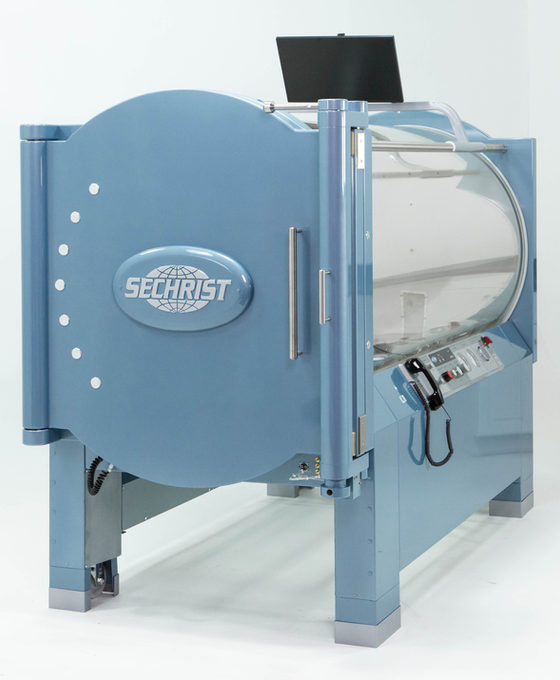
Rigid-shell monoplace units from Sechrist for hospitals and specialist clinics.
Carry-case designs from Summit to Sea. Travel-ready for athletes and mobile practitioners.
Multiplace systems from Perry Baromedical and Fink. 2–18 patient capacity, AERB docs.
The Detail
What Published Protocols Describe — and the Equipment
What HBOT for SSNHL involves (educational)
In hyperbaric medicine, hyperbaric oxygen for sudden hearing loss places the patient in a sealed chamber at raised pressure breathing high oxygen concentrations, sharply increasing the oxygen available to the inner ear, which is unusually dependent on its oxygen supply. Protocols typically describe pressures around 2.0–2.5 ATA across a course of sessions, generally begun as early as possible after onset and often alongside standard steroid treatment. We present this only for education and to explain the equipment implication; it is not clinical guidance, and whether hyperbaric oxygen is appropriate in any case, and its timing, is a specialist ENT judgement.
A recognised — and time-sensitive — indication
SSNHL is among the recognised hyperbaric indications, but its defining practical feature is time-sensitivity: the literature and clinical practice generally treat earlier intervention as more relevant, with the window understood in days-to-weeks terms. This matters for two audiences. For an individual, it means urgency of assessment, not equipment research. For a clinic building capability, it means a service must be able to see and treat such patients promptly to be clinically meaningful. We highlight the time factor because it is the single most important thing about this indication and the easiest for misleading content to obscure.
An adjunct alongside standard care
It is important to frame hyperbaric oxygen here accurately: where it is used for SSNHL, it is generally as an adjunct alongside the standard steroid-based treatment that ENT specialists lead, not as a replacement for it. The clinical decisions — whether to use it, when, for whom, in what combination — are the specialists’, informed by the individual case and the evidence. We make no claim about hearing outcomes; our role is confined to the equipment. Presenting hyperbaric oxygen as a stand-alone cure for hearing loss would misrepresent both the clinical picture and our position.
Why this points to a hard clinical chamber
The equipment consequence is clinical. Pressures around 2.0–2.5 ATA exceed a mild soft chamber’s range and, with the supervised nature of the treatment, point to a rigid hard chamber — a monoplace clinical unit or a multiplace system. Because SSNHL treatment is time-sensitive and delivered as a course over the following days and weeks, availability and scheduling matter: a unit needs to accommodate a new urgent case promptly. We help a clinic or hospital match chamber type and capacity to that need across five brands, so the service can respond within the clinically relevant window.
Configuration for an ENT or hyperbaric clinic
The buyer here may be a hospital ENT service, a dedicated hyperbaric clinic, or a multi-indication hyperbaric unit. A monoplace chamber suits a focused or lower-volume service and a smaller budget; a multiplace system suits higher throughput and mixed indications. Given SSNHL’s urgency, the practical question is whether the configuration allows a new time-critical patient to be started promptly alongside existing caseload. We help model that, provide the documentation a clinic needs, and deliver, install and service the chamber, while the clinical protocols and scheduling priorities remain the specialists’.
Part of a broader hyperbaric service
SSNHL alone is unlikely to justify a chamber, as cases are intermittent; it typically sits within a broader hyperbaric service covering wound care, diabetic foot, radiation injury and other recognised indications, with urgent hearing-loss cases accommodated within that capability. We help a facility size the chamber to the full basket of indications so that urgent SSNHL patients can be treated promptly when they present, while the equipment is well-utilised across steadier indications the rest of the time.
India equipment, import and compliance
For an Indian clinic or hospital the practicalities are those of a clinical chamber: genuine sourcing, a landed cost for imported units covering freight, customs, GST and delivery, on-site installation and commissioning, and attention to oxygen handling and fire safety. AERB governs ionising radiation and is generally not the relevant clearance for a chamber; the meaningful documentation is the manufacturer’s pressure-vessel and build certification, which we provide. We act as importer of record, quote an all-in ₹ figure, and remain the accountable India service and AMC contact. Only genuine, documented units — never grey-market copies.
Availability matters for a time-sensitive service
For a time-sensitive indication, chamber availability and reliability take on particular importance: a unit that is down, or fully booked with no urgent capacity, cannot serve an SSNHL patient within the window when treatment is considered most relevant. That argues for dependable, well-maintained equipment and realistic capacity planning. We supply genuine chambers with warranty and authentic spares, provide responsive service and AMC across India, and help a clinic plan capacity so urgent cases can be accommodated — because for this indication, timely availability is part of the clinical value of owning the equipment.
For individuals: urgency, not equipment
To close where the individual reader matters most: if you have experienced sudden hearing loss, the responsible message is unambiguous — seek urgent ENT assessment now. The value of any treatment for SSNHL, standard or hyperbaric, is generally understood to depend on acting quickly, and that means a specialist visit, not time spent researching or buying a chamber. Hyperbaric oxygen, where appropriate, is arranged through that specialist care at a clinical facility. We direct individuals to urgent ENT care rather than toward equipment, because for a time-sensitive condition, that guidance is far more useful than any page about hardware.
Capacity and scheduling for urgent cases
For a clinic or hospital building capability that includes sudden hearing loss, the equipment planning has a distinctive twist: because the indication is time-sensitive, the service’s value depends partly on being able to accommodate a new urgent patient promptly, not just on owning a chamber. That makes capacity planning a real consideration. A single monoplace chamber fully booked with steady elective cases may struggle to slot in an urgent SSNHL patient within the window when treatment is generally considered most relevant; a facility anticipating such cases may value either spare capacity or the throughput of a multiplace system. On the equipment side we help a clinic think this through — how a given configuration’s throughput interacts with an urgent, time-critical caseload, and whether the planned mix of indications leaves room to respond quickly. We do not set clinical priorities or scheduling rules, which are the specialists’; we simply make sure the equipment’s capacity is understood realistically, so that a service intending to treat urgent hearing-loss cases is not undermined by a chamber that cannot fit them in.
How a clinic equipment enquiry works with us
When an ENT service, hyperbaric clinic or multi-indication unit approaches us about a chamber that will serve SSNHL among other indications, we begin from the clinical brief its specialists provide: the pressures their protocols require, the expected caseload across hearing loss and the other recognised indications, whether urgent capacity is a priority, and the space and services available. We translate that into equipment — monoplace or multiplace, size, oxygen and monitoring interfaces, and installation requirements — and compare suitable models across five global manufacturers so the clinic is not tied to one maker. We then set out the delivered, installed and maintained ₹ cost, act as importer of record, and commit to being the accountable India service and AMC contact, with attention to the availability a time-sensitive indication needs. The clinical brief — whether and when to use hyperbaric oxygen for a given patient, in what combination with steroid treatment — stays entirely with the ENT and hyperbaric specialists. Our role is only to ensure the equipment behind their service is the right one, genuinely sourced, correctly installed, and reliably available when an urgent case presents. For a time-sensitive indication in particular, that reliability is not an afterthought but part of the clinical value of the equipment: a chamber that is dependable and well-maintained, backed by prompt service and genuine spares, is one a clinic can actually count on to treat an urgent hearing-loss patient within the window that matters — which is exactly the standard we hold every clinical installation we supply to, and the reason the accountable, long-term support relationship sits at the centre of what we offer rather than at its margins. In short, we are glad to be the equipment partner behind an ENT or hyperbaric service that treats sudden hearing loss, and equally clear that the urgency, the treatment decisions and the care itself belong entirely with the specialists who lead them.
Time-sensitivity is the point — see an ENT specialist urgently
One feature makes sudden hearing loss different from most topics here and must be stated first: it is time-sensitive. Sudden sensorineural hearing loss is treated as a medical urgency by ENT specialists, because the window in which any intervention — standard steroid treatment, and where used, hyperbaric oxygen as an adjunct — is generally considered relevant is measured in days to a few weeks from onset, not months. That means the most useful thing this page can do for an individual is direct them, immediately, to urgent ENT assessment rather than toward researching equipment. There is also no home-chamber answer: where hyperbaric oxygen is used for SSNHL it is arranged through specialist care at clinical pressures. We cover the indication because hospitals and hyperbaric clinics build capability to serve it among other recognised uses, and those are equipment buyers we can help — but for a person who has just lost hearing, the correct action is an urgent specialist visit, today.
Equipment, compliance and installation
Adding an HBOT capability is an equipment and facility decision as much as a clinical one. Beyond the chamber itself there is AERB and facility planning, oxygen supply and fire safety, installation, warranty and after-sales. As a multi-brand aggregator we bring the chamber options together, provide the technical documentation your facility and biomedical teams need, and coordinate delivery and installation across India. What we deliberately do not do is advise on clinical protocols or patient care — that stays with your medical team.
How we help — equipment only
To be clear about our role: TheHBOT.com supplies hyperbaric chambers and, where useful, builds them to specification on demand. We compare OxyHealth, Sechrist, Summit to Sea, Perry Baromedical and Fink, source genuine units, and deliver, install and support them across India. We do not provide therapy, run sessions, diagnose, or make claims about outcomes. If you or your facility, guided by a qualified doctor, decide to pursue HBOT for sudden sensorineural hearing loss, tell us the pressures your protocol calls for, your capacity and your city, and we will recommend the best-fit chamber and return a delivered India price — usually within one business day.
Buying Guide
If You're Evaluating a Chamber
For anyone considering sudden sensorineural hearing loss HBOT equipment, tell us these and we can specify the right chamber.
Clinical pressures — What ATA does your protocol call for (per your doctors)?
Capacity — Single-patient monoplace, or multiplace for several?
Setting — Home, clinic, hospital or recovery centre?
Compliance — AERB and facility documentation needed?
City — Where should we deliver and install?
Explore Pricing & Options
Compare Before You Buy
Continue to the page that matches where you are in your decision.
FAQ
HBOT for Sudden Sensorineural Hearing Loss — Questions
Common equipment questions — always confirm medical suitability with a doctor.