For Wound Care
Hyperbaric Chambers in Wound-Care Centres
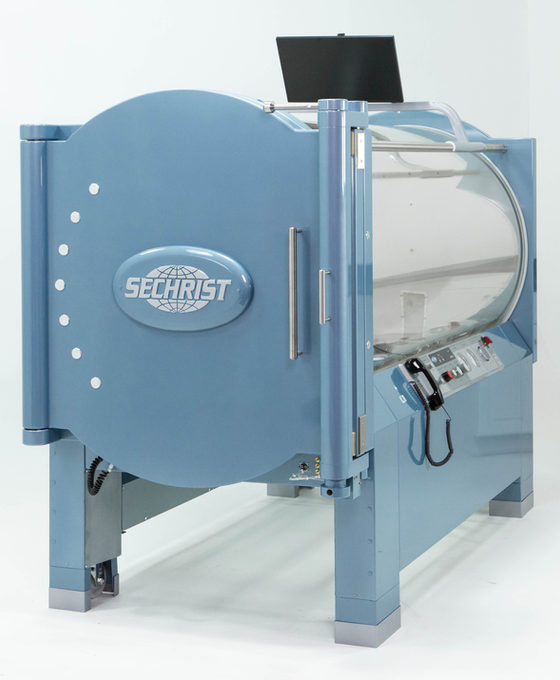
Quick answer: For wound-care programmes, a clinical hard chamber (monoplace or multiplace) at 2.0–3.0 ATA is the equipment used — from Sechrist, Perry Baromedical or Fink, priced ₹15 lakh–1.5 crore+ in India, with AERB and facility planning. We supply and support the chamber; we are not a clinic and don't provide treatment.
A hyperbaric chamber for wound care is a clinical system — monoplace or multiplace — operating at the higher pressures (typically 2.0–2.4 ATA, up to 3.0 ATA) that established clinical protocols use. Wound-care centres and hospital departments choose rigid, pressure-certified chambers from makers such as Sechrist, Perry Baromedical and Fink, installed professionally with a compressor and oxygen supply and documentation relevant to AERB guidelines.
The choice of monoplace versus multiplace flows from patient volume and clinical scope: monoplace treats one patient per session and suits moderate throughput; multiplace treats several together with an attending clinician and suits high-capacity centres. Chamber specification should follow the intended protocol, per the Undersea and Hyperbaric Medical Society.
TheHBOT.com is a multi-brand aggregator. We benchmark clinical makers against your protocol and budget, provide the regulatory documentation your centre needs, and coordinate import, installation, commissioning and after-sales support.
Single-patient clinical chambers for moderate wound-care throughput.
Multi-patient systems for high-capacity wound-care programmes.
Documentation relevant to Indian regulatory requirements for clinical installs.
Import, installation, commissioning and maintenance SLA coordinated for you.
India Pricing
Wound-Care Hyperbaric Chamber Price in India
Clinical monoplace chambers start from ₹15 lakh; multiplace systems from ₹40 lakh upward. We confirm on enquiry.
| Chamber Type | Pressure | Primary Buyer | Indicative India Price | Get Price |
|---|---|---|---|---|
| Soft / Portable | 1.3 – 1.5 ATA | Home, wellness, athletes | ₹3.5 – 12 lakh | Enquire → |
| Hard Monoplace | 1.5 – 3.0 ATA | Clinics, hospitals | ₹15 – 40 lakh | Enquire → |
| Hospital Multiplace | 2.0 – 3.0 ATA | Hospitals, wound-care | ₹40 lakh – 1.5 crore+ | Enquire → |
Compare clinical makers on the HBOT chamber manufacturers page, or read the hard hyperbaric chamber guide.
Product Range
Wound-Care Chamber Options
Clinical monoplace and multiplace systems for wound-care programmes.
Inflatable fabric-shell units from OxyHealth and Summit to Sea. Compact, self-install.
Rigid-shell monoplace units from Sechrist for hospitals and specialist clinics.
Carry-case designs from Summit to Sea. Travel-ready for athletes and mobile practitioners.
Multiplace systems from Perry Baromedical and Fink. 2–18 patient capacity, AERB docs.
Wound-Care Detail
Specifying a Wound-Care HBOT System
Monoplace or multiplace for wound care
A wound-care centre's first decision is capacity. A monoplace chamber treats one patient per pressurised session and suits centres with moderate, scheduled volumes; it is simpler to install and lower in cost. A multiplace system treats several patients together, with an attending clinician inside the chamber, and suits high-volume wound-care programmes and referral centres handling complex cases. Multiplace delivers throughput and clinical flexibility that monoplace cannot, but demands more space, infrastructure and investment. The right choice follows your projected patient volume and clinical scope. We help your clinical and facilities teams map that out and benchmark suitable systems from Sechrist, Perry Baromedical and Fink, so the chamber matches the programme rather than being over- or under-specified.
Installation, compliance and uptime
A wound-care HBOT system is a clinical installation that must be planned alongside the purchase. It needs floor space, a compressor and oxygen supply sized to the chamber, electrical and ventilation provision, and — for multiplace — structural planning, all to manufacturer specification. Documentation relevant to AERB guidelines should be arranged in parallel with procurement so commissioning is not delayed. Because a wound-care programme depends on the chamber, we structure a maintenance SLA and spare-parts access up front to protect uptime — downtime means cancelled treatments. We coordinate the manufacturer's installation and commissioning, provide the technical and regulatory documentation, and remain your India-based point of contact for service.
Sourcing and procurement for wound-care centres
Clinical systems are imported, so a realistic India price is a landed, installed, commissioned figure. As an aggregator we source genuine systems, benchmark makers against your protocol and budget, and structure volume and framework pricing for groups running multiple wound-care sites. We provide the documentation institutional procurement requires and manage the project from specification through installation and handover. Share your expected patient volume, monoplace-versus-multiplace preference, facility details and city, and we will return a clinical specification and a delivered, installed India price, with warranty and maintenance terms in writing, so your procurement decision is fully informed.
Uptime and throughput in a wound-care programme
For a wound-care centre, two operational factors deserve attention alongside the purchase: uptime and throughput. Wound-care protocols often involve repeated sessions over a course of treatment, so patients depend on the chamber being available consistently — which makes a robust maintenance SLA and ready spare-parts access essential rather than optional. Throughput planning matters too: if projected demand is high, a monoplace chamber can become a bottleneck, and a multiplace system, or more than one chamber, may be the better long-term fit. We help centres model expected caseload against chamber capacity so the equipment supports the programme rather than constraining it. Where a centre expects to grow, we keep specifications and support consistent so adding capacity later is straightforward. Planning uptime and throughput from the start is what keeps a wound-care HBOT programme running smoothly once patients are relying on it.
Buying Guide
Buying a Wound-Care HBOT System — 5-Point Checklist
Clinical buyers who answer these get accurate quotes fastest.
Capacity — Monoplace (single) or multiplace (multi-patient)?
Volume — Expected patients per day drives the configuration.
Pressure — Confirm the pressure your protocol requires.
Site & services — Space, compressor, oxygen and structural provision.
Compliance & SLA — AERB documentation and a maintenance SLA.
Explore Pricing & Options
Compare Before You Buy
Continue to the page that matches where you are in your decision.
Quick Reference
Wound-Care Chamber Options
| Option | Capacity | Typical Brands | India Price |
|---|---|---|---|
| Clinical Monoplace | 1 patient | Sechrist | ₹15 – 40 lakh |
| Multiplace | 2 – 18 | Perry, Fink | ₹40 lakh – 1.5 cr+ |
FAQ
Hyperbaric Chamber for Wound Care — FAQs
Common questions from wound-care buyers.