For Finance Teams
Why HSN, GST and Duty Belong in Your Budget
Quick answer: A hyperbaric chamber's landed cost in India is more than the quote — HSN classification drives the GST rate, imported units attract customs duty, and GST-registered buyers may be able to claim input tax credit. Confirm exact codes and rates with your tax adviser; we provide itemised quotes.
When a business or institution buys a hyperbaric chamber, the price on the quote is not the whole cost. How the chamber is classified for HSN, the GST that applies, and — for imported units — the customs duty on the landed price, all feed into the true budget. So does whether your organisation can claim input tax credit, which changes the effective cost for a GST-registered buyer. Finance and procurement teams that model these early avoid unpleasant surprises at the invoice and customs stage; those that do not can find the landed cost meaningfully above the headline quote.
TheHBOT.com is an aggregator and on-demand manufacturer, not a tax authority or a chartered accountant — this guide is orientation to help you ask the right questions, and the exact HSN code, GST rate and duty applicable to your purchase must be confirmed with qualified tax advisers and current government schedules. What we can do is give your finance team a clear, itemised quote that separates equipment, applicable taxes and any import component, so the numbers they model are grounded in a real proposal. Below we walk through each piece and what typically drives it.
How a hyperbaric chamber is categorised for tax and customs purposes.
The GST that applies, and how it appears on an institutional invoice.
Customs duty on the landed price where a unit is imported.
Whether a GST-registered buyer can claim input tax credit on the purchase.
India Pricing
The Tax & Customs Elements of Landed Cost
Each element below sits between the quoted equipment price and the final cost to your organisation.
| Chamber Type | Pressure | Primary Buyer | Indicative India Price | Get Price |
|---|---|---|---|---|
| Soft / Portable | 1.3 – 1.5 ATA | Home, wellness, athletes | ₹3.5 – 12 lakh | Enquire → |
| Hard Monoplace | 1.5 – 3.0 ATA | Clinics, hospitals | ₹15 – 40 lakh | Enquire → |
| Hospital Multiplace | 2.0 – 3.0 ATA | Hospitals, wound-care | ₹40 lakh – 1.5 crore+ | Enquire → |
Confirm current rates via the CBIC-GST portal and your tax advisers. For the equipment decision, start with the buyer's guide.
Product Range
How Sourcing Route Affects the Tax Picture
Whether a chamber is imported or built in India changes the customs and landed-cost picture. Here is the shape of it.
Inflatable fabric-shell units from OxyHealth and Summit to Sea. Compact, self-install.
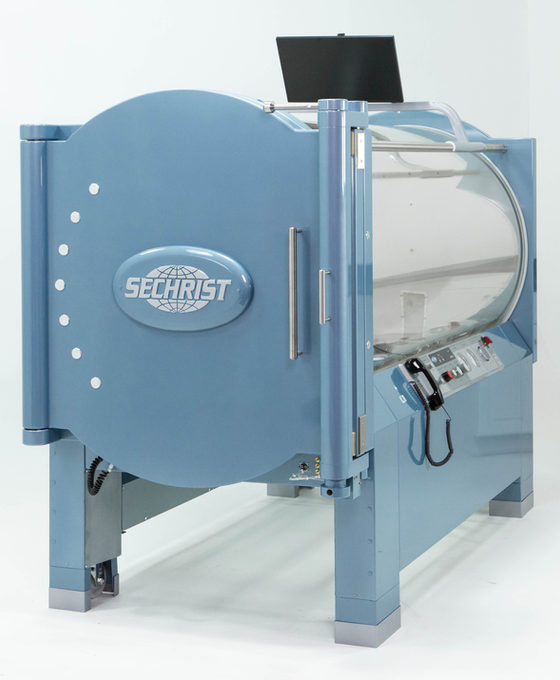
Rigid-shell monoplace units from Sechrist for hospitals and specialist clinics.
Carry-case designs from Summit to Sea. Travel-ready for athletes and mobile practitioners.
Multiplace systems from Perry Baromedical and Fink. 2–18 patient capacity, AERB docs.
The Detail
HSN, GST, Duty and Input Credit — Explained
HSN classification and why it matters
HSN — the Harmonised System of Nomenclature — is the coding system that classifies goods for GST and customs. Every product sold or imported is assigned an HSN code, and that code drives the GST rate and, for imports, the customs treatment. A hyperbaric chamber is a medical and mechanical apparatus, and its correct classification determines the tax that applies, which is why finance teams ask for the HSN code up front. Because classification can hinge on the specific product and its stated use, the exact code for your purchase should be confirmed with your tax adviser against current schedules rather than assumed. We state the classification we use on our quotes so your team can verify it, and so the tax modelling starts from the same basis as the invoice.
GST on the purchase and input tax credit
GST applies to the supply of the chamber, and the rate follows from the HSN classification and prevailing schedules. For a GST-registered business or institution, the more important question is often input tax credit — whether the GST paid on the chamber can be set off against your output tax liability, which reduces the effective cost of the equipment. Eligibility depends on your registration, how the asset is used, and current rules, so it is a question for your finance team and tax adviser, but it can change the real cost materially and belongs in the budget model from the start. We issue proper tax invoices with the GST shown clearly so your accounts and credit claims have the documentation they need.
Import duty on landed units
Where a chamber is imported, customs duty applies to the landed value, and this is the element most often missed in early budgeting. The duty, together with any associated charges, sits on top of the ex-works or FOB price and freight, and the total of these is the landed cost before GST. This is one practical reason a made-in-India build can sometimes be the better value: it can reduce or reshape the import-duty component and simplify the customs process, as well as shortening lead time. When we quote an imported model we separate the equipment, freight and duty components so your team sees the full landed picture rather than a single number that hides the customs element.
Depreciation, made-in-India, and getting a clean quote
Two further points matter to institutional budgets. First, as a capital asset a hyperbaric chamber is typically depreciable, which affects its treatment in your accounts over time — the specifics are for your finance team and current tax rules. Second, the sourcing route interacts with all of the above: an imported unit carries the customs component, while an on-demand India build through our manufacturing tie-ups can change the duty and lead-time picture and is worth comparing on landed cost, not just sticker price. The practical takeaway is to insist on an itemised quote that separates equipment, taxes and any import component. That is exactly how we quote institutional buyers — send us your requirement and registration status and your finance team will get numbers they can model with confidence, then verify with your advisers.
Buying Guide
Finance & Procurement Checklist
Give your finance team these and the landed cost can be modelled accurately from the quote.
HSN code used — The classification stated on the quote, to verify with advisers.
GST shown — Applicable GST itemised on a proper tax invoice.
Import component — Equipment, freight and duty separated for imported units.
Input credit — Eligibility checked with your tax adviser for your registration.
Depreciation — Capital-asset treatment confirmed by your finance team.
Sourcing route — Imported vs made-in-India compared on landed cost.
Explore Pricing & Options
Compare Before You Buy
Continue to the page that matches where you are in your decision.
Quick Reference
Tax & Customs Elements of Landed Cost
| Element | What It Is | Who Confirms It |
|---|---|---|
| HSN Code | Classification driving GST & customs | Your tax adviser, current schedules |
| GST | Tax on the supply of the chamber | Finance team, CBIC-GST schedules |
| Import Duty | Customs on landed value of imports | Customs broker / adviser |
| Input Credit | Set-off for GST-registered buyers | Your tax adviser |
FAQ
HSN, GST & Import Duty — FAQs
The tax and customs questions institutional buyers ask.