The Practical Question
How Big Is a Hyperbaric Chamber?
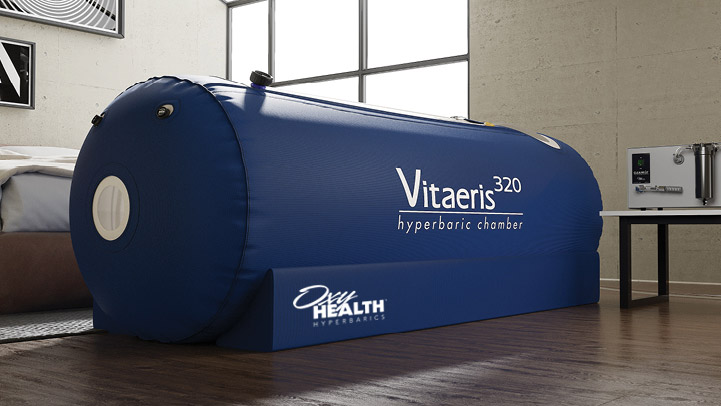
Quick answer: Hyperbaric chamber size varies by type. Soft home chambers are roughly 26–40 inches in internal diameter and 7–8 feet long; hard clinical monoplace chambers are larger and need a planned room; multiplace systems are room-sized installations. Always plan the footprint and access before buying — we confirm exact dimensions for any model.
Size is one of the most practical and most overlooked questions in buying a hyperbaric chamber. It has two parts: the internal dimensions — how much room there is inside for the user, which decides comfort — and the external footprint and access — how much space the chamber occupies and whether it fits through your doors and into your room. Get either wrong and even the right chamber becomes a problem, which is why we confirm exact figures for the specific model before you commit.
TheHBOT.com is a multi-brand aggregator, so we can give you the real internal and external dimensions for any model across five brands and match them to the user's height and your available space. This guide explains how size works across the four chamber types and what to plan for, so the chamber you buy fits both its user and its room.
Diameter and length inside — decides comfort for the user.
Floor space, height and door access to plan for.
Soft chambers pack down; hard chambers need access planning.
We match internal length to the tallest user.
India Pricing
Size by Chamber Type
Internal and external size scale with the chamber type. Here is the shape of it before we confirm exact model figures:
| Chamber Type | Pressure | Primary Buyer | Indicative India Price | Get Price |
|---|---|---|---|---|
| Soft / Portable | 1.3 – 1.5 ATA | Home, wellness, athletes | ₹3.5 – 12 lakh | Enquire → |
| Hard Monoplace | 1.5 – 3.0 ATA | Clinics, hospitals | ₹15 – 40 lakh | Enquire → |
| Hospital Multiplace | 2.0 – 3.0 ATA | Hospitals, wound-care | ₹40 lakh – 1.5 crore+ | Enquire → |
Once size is settled, compare models on the best home chamber guide, or plan a clinical install with room setup.
Product Range
Dimensions Across the Four Types
Soft, portable, hard and multiplace chambers each occupy very different space.
Inflatable fabric-shell units from OxyHealth and Summit to Sea. Compact, self-install.
Rigid-shell monoplace units from Sechrist for hospitals and specialist clinics.
Carry-case designs from Summit to Sea. Travel-ready for athletes and mobile practitioners.
Multiplace systems from Perry Baromedical and Fink. 2–18 patient capacity, AERB docs.
The Detail
Understanding Hyperbaric Chamber Dimensions
Soft chamber sizes — internal and packed
Soft chambers are the most size-friendly. Internally they are typically described by diameter — commonly in the 26 to 40 inch class — and are around seven to eight feet long, enough for an adult to lie comfortably; the roomier models (such as the OxyHealth Fortius 420 or larger Summit to Sea units) suit taller users. Externally they need floor space for that length plus room to enter and exit, and space nearby for the compressor. A real advantage is that soft chambers pack down for delivery and can be moved through normal doorways, so getting one into a spare room is rarely a problem. We match internal length to the tallest user before you buy.
Hard clinical chamber sizes and access
Hard monoplace chambers are larger, heavier and rigid, so both their footprint and their access need planning. They do not pack down, which means delivery access — doorways, corridors, lifts — has to be checked in advance, and the room needs to accommodate the chamber plus clearance around it for operation and service. This is part of the site planning we handle for clinical installs, alongside power and oxygen. The internal space is generous for a single patient, but the external requirements are a facility consideration rather than a spare-room one, which is why clinical buyers plan the room and the chamber together.
Multiplace systems are room-sized installations
A multiplace chamber is effectively a room in itself — a large rigid vessel seating two to eighteen occupants with an attendant inside — and its dimensions are a facility-design matter from the outset. Structural loading, floor area, ceiling height, access for installation, and clearance for oxygen and service all have to be designed in. For an institution, the multiplace chamber's size shapes the room around it rather than fitting into an existing space, which is why we share full technical drawings for the specific system as soon as it is shortlisted, for your architects and biomedical engineers to build around.
How we make sure it fits
Because the published or headline size of a chamber does not tell you whether it fits your user and your space, we do the practical part with you: we provide the exact internal and external dimensions for the specific model, check internal length against the tallest user's height, and confirm that the external footprint and delivery access work for your room. For clinical and multiplace chambers we provide full technical drawings for facility planning. Tell us the user's height, your room and door measurements, and your city, and we will recommend models that genuinely fit and confirm the dimensions before you order.
Buying Guide
Sizing Checklist
Have these measurements ready and we will confirm a chamber that fits.
User height — The tallest person who will use it.
Room space — Floor area and ceiling height available.
Door access — Doorway and corridor widths for delivery.
Chamber type — Soft, portable, hard or multiplace?
City — Where should we deliver?
Explore Pricing & Options
Compare Before You Buy
Continue to the page that matches where you are in your decision.
Quick Reference
Chamber Size by Type
| Type | Internal (typical) | Space Needed |
|---|---|---|
| Soft | 26–40" diameter, 7–8 ft long | Spare room; packs down to move |
| Portable | Compact, carry-case | Small; grab-and-go |
| Hard Monoplace | Generous single-patient | Planned room + clearance |
| Multiplace | 2–18 occupants | Room-sized, facility-designed |
FAQ
Hyperbaric Chamber Sizes — FAQs
Common questions about chamber dimensions and space.