Format Choice
Portable vs Fixed Hyperbaric Chamber
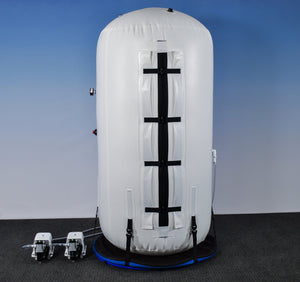
Quick answer: Portable chambers are carry-case soft units (1.3–1.5 ATA) for athletes and mobile use (₹5–12 lakh); fixed chambers are installed soft or hard units for a permanent room. Portability vs pressure and permanence is the trade-off. We supply both and match to your setting and budget.
Portable vs fixed hyperbaric chamber is a question of format, not performance. Both are soft chambers operating in the mild 1.3–1.5 ATA range, so they deliver comparable mild hyperbaric use. The difference is mobility: a portable chamber packs into a carry case and sets up anywhere, while a fixed chamber lives in one room. That single distinction — will the chamber travel — decides which format you should buy.
TheHBOT.com sells both, as a multi-brand aggregator, so this comparison is unbiased. Portable chambers from Summit to Sea suit athletes, mobile practitioners and multi-site facilities; fixed soft chambers from OxyHealth and others suit a dedicated home or studio room. This guide explains the trade-offs so you buy the format that matches how you will actually use the chamber — from ₹3.5 lakh fixed, ₹5 lakh portable.
Packs into a case, sets up anywhere — for travel and moving facilities.
Lives in one room — a dedicated home or studio setup.
Both run mild 1.3–1.5 ATA — the difference is mobility, not performance.
We recommend the format that fits how you will use it.
India Pricing
Portable vs Fixed — Price and Format
How portable and fixed soft chambers compare on price and use, within the mild range.
| Chamber Type | Pressure | Primary Buyer | Indicative India Price | Get Price |
|---|---|---|---|---|
| Soft / Portable | 1.3 – 1.5 ATA | Home, wellness, athletes | ₹3.5 – 12 lakh | Enquire → |
| Hard Monoplace | 1.5 – 3.0 ATA | Clinics, hospitals | ₹15 – 40 lakh | Enquire → |
| Hospital Multiplace | 2.0 – 3.0 ATA | Hospitals, wound-care | ₹40 lakh – 1.5 crore+ | Enquire → |
Explore portable chambers and fixed soft chambers, or the home chamber guide.
Product Range
Where Portable and Fixed Sit
Both are mild-pressure soft chambers; the difference is mobility.
Inflatable fabric-shell units from OxyHealth and Summit to Sea. Compact, self-install.
Rigid-shell monoplace units from Sechrist for hospitals and specialist clinics.
Carry-case designs from Summit to Sea. Travel-ready for athletes and mobile practitioners.
Multiplace systems from Perry Baromedical and Fink. 2–18 patient capacity, AERB docs.
The Comparison
Portable vs Fixed — Compared
Same pressure, different mobility
The key thing to understand is that portable and fixed soft chambers operate at the same mild 1.3–1.5 ATA, so at the level of what the chamber does, they are comparable — both deliver mild hyperbaric use. The difference is entirely about mobility. A portable chamber is engineered to pack into a carry case, inflate on-site, and be moved between locations; a fixed chamber is set up in one place and stays there. Neither is "better" in performance terms; the right one depends on whether you need the chamber to travel. This means the decision is refreshingly simple — it comes down to logistics and where the chamber will be used, not to pressure or capability.
Who portable suits
A portable chamber earns its place when the chamber needs to move. Touring athletes and sports teams use one to keep a recovery routine on the road; mobile practitioners bring the chamber to clients; and multi-site clinics or studios share a single chamber across locations rather than buying one for each. Summit to Sea is the leading source of portable models. The trade-off is a little less internal space and the need for a power source wherever you set up, plus a modest price premium — portable typically starts around ₹5 lakh. If mobility is genuinely part of how you will use the chamber, that premium is well worth it.
Who fixed suits
A fixed soft chamber is usually the better value when the chamber will live in one room and be used by the same household or at one site. You get a little more internal space for the money and nothing to pack away, and setup is a one-time affair. Fixed soft chambers from OxyHealth and others start at around ₹3.5 lakh — the most affordable way to own a chamber. For a home buyer with a dedicated space, or a studio with a fixed recovery room, a fixed chamber is typically the sensible choice. Only if you specifically need the chamber to travel does the portable format justify its premium and slightly smaller internal size.
Which format should you buy?
The decision is simple: if the chamber will move between locations, buy portable; if it will stay in one room, buy fixed. Both give you mild hyperbaric use at 1.3–1.5 ATA, so you are choosing logistics, not performance. Tell us how often the chamber will move, who will use it and your space, and we will recommend the right format and return a delivered India price. As a multi-brand aggregator selling both, we have no reason to push the pricier portable if a fixed chamber fits better — we simply match the format to how you will use it. HBOT equipment should suit its intended use, as the Undersea and Hyperbaric Medical Society notes.
Buying Guide
Portable or Fixed? — 5 Things to Tell Us
Give us these and we will recommend the right format.
Mobility — Will the chamber move between locations, or stay put?
Use — Athlete/mobile/multi-site, or a dedicated home room?
Internal size — Do you need maximum internal space (favours fixed)?
Budget — Fixed from ₹3.5L; portable from ₹5L.
City — Where should we deliver?
Explore Pricing & Options
Compare Before You Buy
Continue to the page that matches where you are in your decision.
Quick Reference
Portable vs Fixed Chamber
| Attribute | Portable | Fixed |
|---|---|---|
| Mobility | Carry-case, movable | Installed, permanent |
| Pressure | 1.3 – 1.5 ATA | 1.3 – 3.0 ATA |
| Best for | Athletes, travel | Homes, clinics, hospitals |
| India price | ₹5 – 12 lakh | ₹3.5 lakh – 1.5 cr+ |
FAQ
Portable vs Fixed Hyperbaric Chamber — FAQs
Common questions about chamber format.